Peers.net is joining WellSpace Health

Some big changes are happening with our company.

Earlier this year we made the tough decision that our Peers.net peer support service would grow faster and have more impact within a larger organization. Peers.net is moving to WellSpace Health, a nonprofit community health system which provides medical and mental health care to over 130,000 Medicaid and uninsured patients and runs the 988 crisis line in Northern California.

Our head of peer support, Jammie Gardner, and our care coordinator, Rebecca Young, are joining WellSpace, along with our California-based peers. Peers.net service is currently suspended while they are going through onboarding at WellSpace, but will resume soon. WellSpace is also continuing our accredited training program, using our scalable online model to train more young adults as peer support specialists and community health workers.

Kim Newell Green, MD FAAP and I co-founded Flourish Labs just after the pandemic to scale peer support as a solution to the youth mental health crisis. Our founding story was personal as well as data-driven. We saw the shortage of mental health professionals in our home and work lives, and had personally experienced the power of peer support through family members struggling with addiction. Peer support is evidence-based but underutilized: many people don’t know about it as an alternative to therapy, it’s rarely available via telehealth, and insurance coverage is limited.

We built Peers.net to change that, with a team of healthcare, peer support and tech experts. We co-created with young adults and teens to launch a mental health service optimized for Gen Z, giving them a choice of providers by shared lived experience and identity (we’re proud that half of our peers identify as LGBTQ+ and BIPOC). We demonstrated that Medicaid and commercial health plans will reimburse peer support, signing contracts in 5 states covering 10 million lives. We trained over 100 young adults as peer support specialists, and could have trained thousands – we received over 4,000 job applications. We delivered high-quality service to nearly 1000 young people, with 95% saying they were extremely satisfied and 93% saying they had an excellent therapeutic alliance with their peer.  We received incredible testimonials about the profound impact of feeling truly seen and heard. We profoundly changed lives, and in some cases saved the lives of those we reached.

However, we didn’t scale to our impact and revenue goals. Everyone knows there’s massive demand for youth mental health services: 34% of teens and young adults struggle with mental illness, and over half get no care. Despite this, finding clients and enrolling them into our service proved challenging. We’re not alone in this struggle. Many digital health companies we spoke to face similar patient acquisition challenges as search is disrupted by LLMs, ads are becoming ever more expensive, and activating provider referral channels takes enormous effort and time.

Earlier this year we made the tough decision that Peers.net would grow faster and have more impact within a larger organization. WellSpace Health shares our commitment to peer support and already includes peers in their clinic-based care model. Our telehealth and AI technology will help them expand their tech capabilities and geographical reach.

The bittersweet part: Since WellSpace is focused on California, we’ve ended our operations and health plan contracts in Oregon, Nevada, Washington DC and New Jersey. Many of our team won’t be moving to WellSpace, including Kim and myself. Some of our team already have new roles, others are looking for their next opportunities.

💃 You’d be lucky to have Erika Rowen, Hannah Schilpp, Paola Veglio and Kim Newell Green, MD FAAP on your team. Our talented peer supporters Rilynn McClain-Small, Arianna J., Eli Mendoza, Layla Ghazalba, Gertrude Nakibuule, Julia Parker, Alexzander Chross, Jonathan Mortenson, Myra Kelly, Nina Smith are also seeking new roles. Please DM me if you can help them.

🙏 Thank you

We’re deeply grateful that our mission – scaling peer support through telehealth and AI to address the youth mental health crisis – will continue and grow. We built something meaningful that will outlast our company. Thank you to the WellSpace team A. Jonathan Porteus, PhD, Christie Gonzales, Dr. Janine Bera, Cordia Losh and Ben Renteria for taking on the baton to grow peer support for young people.

A big big thank you to everyone who believed in our vision and joined our journey, especially our incredible team, investors, advisors, and partners made this work possible. We learnt from so many incredible people how to build Peers.net, including teens and young adults, peers, mental health industry experts, and other founders.

to our team:

Article content
The awesome Flourish Labs team!

Kim Newell Green, MD FAAP, Adrian Koren, Alex Weisman, Ally Linfoot, Claire Bradley, Erika Rowen, Hannah Schilpp, Jammie Gardner, Julia Tasiopoulos, Paola Veglio and Rebecca Young

to our investors:

Anna Patterson and Andrew Brackin at Gradient

Luisa Sucre, Craig Dalton, Guy Vidra and Craig Shapiro at Collaborative Fund

Carmine Di Maro and Pushkar Joshi, PhD at the One Mind accelerator

Jason Levin at WGU Labs

Jason Lehmbeck , Lisa Hepburn and Matthew Biel at the Georgetown University Thrive accelerator

Carrie Walton Penner , John Bailey and Judy Park at Fiore Ventures LLC

Don Burton and Rob Hutter at Learn Capital

Philipp Moehring and Andy Chung at Tiny Supercomputer Investment Company

Peggy Cheng and Brian Li at Authentic Heart Foundation

Santi Dewa Ayu and David Ball at the Headstream Innovation accelerator

to our angels (many founders who gave us the best advice!)

Alex Nichols

Arun Gupta

Bradley Horowitz

Brigette Lau

Christina Wire & Jeremy Wire

david lawee

Elliot Schrage

Esther Dyson

Eugénie Rives

Florian Otto

Glen Tullman

Helen Riley & Jean-Philippe Emelie Marcos

Iyah Romm & Sylvia Romm, MD, MPH

Jannine Versi

Jason Chuck

Jessica Powell

John Mayerhofer & Nina Mayerhofer

Jonathan Turner

Josh Golomb

Kasey McJunkin

Laura Thompson

Lee Shapiro

Lenny Mendonca

Margo Georgiadis and Pantelis A. “Pete” Georgiadis

Matt Mullenweg

Neal Katyal

Oliver Puhl & Alix Puhl

Patrick Pichette

Raffi Grinberg & Charlotte Grinberg

R.P. Eddy

Sarah Jones Simmer

Scott Munro

Selina Lo

Seth Sternberg

Sophie Sun

Stephanie Hannon

Tamar Yehoshua

Wei Jiang

to our advisors & partners:

Alison Malmon at Active Minds, Inc.

Amanda Galton at Orrick, Herrington & Sutcliffe LLP

Amanda Sussex

Cam Brand

Charles Metz

Christine Ellis Purcell

Dana Foglesong and Lisa Mariani at Magellan Health

Darshan Gupta and Urvik Patel at Infocusp Innovations

Greg Hajcak at Santa Clara University

Jacinda Shelly at Apero Health (Y Combinator)

Jasmin Acevedo, DSW, LCSW

Joanna Strober

Kali D Cyrus MD MPH

Karen Black at Carelon Behavioral Health

Kelly Davis at Mental Health America

Keanan Joyner at University of California, Berkeley

Lana Volk-Moss

Linsey Morrison

Manpreet Kaur Singh at University of California, Davis

Marc Goldsand at Goldsand Friedberg

Nathan Eagle

Rachel Kotok Goldberg at NovaWell Horizon

Samuel McLean at University of North Carolina at Chapel Hill

Samantha Baker at PacificSource Health Plans

Vasanta Pundarika

to our peer advisory board:

Amna Mohammed

Dennis Tran

Isaac Lara

John Matthews

Julia P.

Sarah Kagan

Sophia Casey

Wow that’s a long list! It takes a village, as Kim always says.

With love & gratitude,

Obi

The AI revolution is underhyped, not overhyped

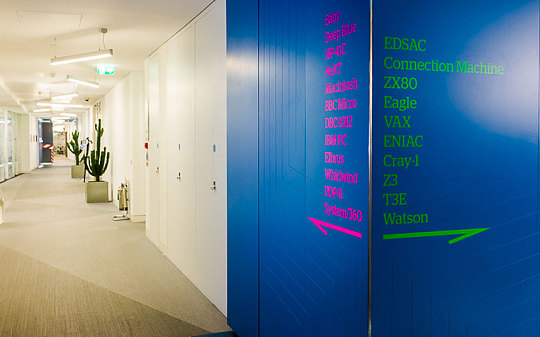
In the early days of Google, when Eric Schmidt was CEO, he frequently came to the London office where our meeting rooms were named after revolutionary computers. Eric invited everyone to an all hands meeting, and just answered our questions for an hour on any topic. He talked about Google’s strategy, the future of computing (back then, Android and Cloud were the new kids on the block) and tech in general. His mantras were ‘focus on the user’ and ‘revenue solves all problems’: if you solve real problems for real people (back then, our end users, advertisers, third party website owners), the money will follow.

This TED interview reminded me of those sessions. Like Eric I lived through the 90s when the internet took off, and was at Google in the 2000s when mobile took off. Gen AI will have a bigger impact on consumers than both of those combined, and I agree with Eric that we haven’t even see a fraction of its impact on each and every one of us. The difference between LLMs and ML is that they touch consumers whereas ML was largely B2B. When consumers drive change, things happen much faster.

Search gave us information at our fingertips, accessible anywhere on our phones. I love the analogy in his talk that LLMs will give everyone DaVinci powers. What if ChatGPT, Gemini and Claude turn us all into creative multi-dimensional thinkers? As an industry it’s our responsibility to make sure AI benefits people broadly, and that we implement it responsibly.

Do you agree or disagree? Comment on my LinkedIn post here.

#technology

#innovation

#ai

#genai

#LLMs

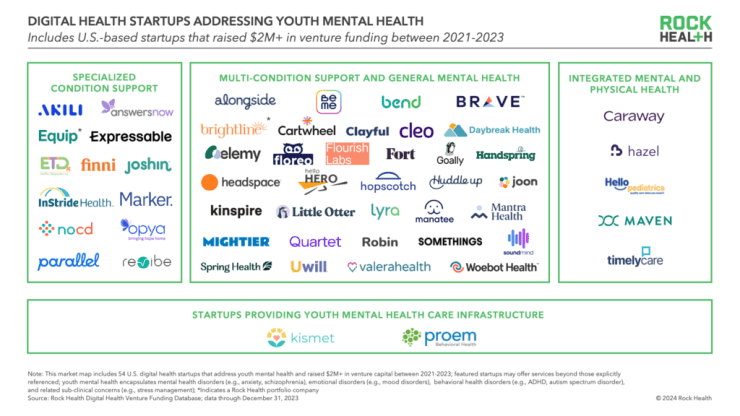
Rock Health’s Youth Mental Health Investment Report

The awesome team at Rock Health just launched a digital youth mental health initiative, in collaboration with Pivotal Ventures, Penner Family Foundation, Hopelab, and the Arthur M. Blank Family Foundation.
Their report on the digital youth mental health investment landscape is worth a read, and I was proud to see Peers.net by Flourish Labs featured in it 🙂
https://rockhealth.com/insights/investing-in-the-future-supporting-digital-innovations-in-youth-mental-health/

#mentalhealth

Introducing the Peers.net Giveback Initiative: making professional peer support accessible to all teens and young adults

Starting today, for every peer support session purchased on Peers.net, we are donating one to our community partners.

Fewer than a quarter of people who experience mental illness in America receive any outpatient mental health care. Of the young adults who got care, more than half pay for it out of pocket (SAMHSA National Survey). One of the biggest barriers to accessing care is cost, and many therapists don’t accept insurance.

We pay our professional peer supporters fairly for their work and provide free training, support and supervision for them. This means that our Peers.net service costs $65 for a 50 minute session. While that’s less than therapy, we know many people still need assistance to cover the cost.

We are committed to making Peers.net accessible to all youth.

To fulfil this commitment, we are partnering with nonprofits and youth-led organizations to donate free Peers.net sessions for their teen and young adult members until we have insurance coverage for our peer support.

The founding partners of our Peers.net Giveback Initiative are:

Active Minds is the nation’s premier nonprofit organization supporting mental health awareness and education for young adults. 

Dragonfly Mental Health is focused on cultivating excellent mental health in academics worldwide by developing, deploying, and evaluating evidence-based strategies. 

I Have The Right To works on creating an ecosystem of respect and support for students and survivors of sexual assault. Founded by a survivor and their parents, they are a hub for middle and high school students, parents, and educators looking for information, support, and avenues of action against sexual assault.

The Mental Health Initiative For South Asians (MHISA) is a grass-roots organization founded by students at UT Austin committed to addressing the societal and structural barriers which prevent South Asian-Americans from accessing mental health care.

Morgan’s Message strives to eliminate the stigma surrounding mental health within the student-athlete community and equalize the treatment of physical and mental health in athletics.

NAMI Clackamas is an Oregon-based chapter of the National Alliance on Mental Illness, dedicated to improving the quality of life for everyone impacted by mental health issues through support, education, and advocacy. We hope to work with more NAMI chapters in future.

OutCare Health is a non-profit leading the charge for LGBTQ+ health equity worldwide, empowering millions of LGBTQ+ individuals with comprehensive resources, support, and education.

Running Start is a nonpartisan nonprofit that trains young women to run for political office. When they surveyed their members how they could support them further, mental health was the #1 request.


We’ll be adding more partners over the next few months. If you are a non-profit or youth-led organization that would like to receive donated sessions for your members, please get in touch. It doesn’t matter whether your mission is directly related to mental health or not – all that matters is that you want to support the mental health of your teen and young adult members, and have a way to distribute our peer support sessions to them.

The role of philanthropy in funding mental health innovation

We believe that peer support should be part of the healthcare system, provided by professional peer supporters who are paid for their work, and funded equitably by insurance alongside other forms of mental health care.

Today, there are only 25,000 people who work as a peer support specialists in the US. Insurance reimbursement for peer support exists, but is not yet wide-spread. As a result, much of peer support is provided by volunteers and funded by philanthropy. This will not scale to reach the millions of people who could benefit from peer support.

We are actively working on partnerships with Medicaid and private insurance companies, so that our Peers.net service will be covered by insurance. But insurance contracts take a while to set up, especially for Medicaid which is administered differently in each state. 

Philanthropy can play an instrumental role to provide bridge funding to demonstrate that peer support works: for young people who want faster access to quality care, for provider groups who are thinking about integrating peer support into their care model, and for health insurance plans who are looking to reduce the overall cost of health care.

On the research side, Professors Keanan Joyner at UC Berkeley and Greg Hajcak at Santa Clara University are conducting a study to assess whether Peers.net telehealth peer support can reduce anxiety and depression in young adults. The study is independent of Flourish Labs, and funded by The Cohen Foundation, the Penner Family Foundation, and an individual donor.

Donors can also help us provide more peer support sessions to our partner organizations. Your donation will go directly to the organization to support their mental health work, and we will provide them with discounted sessions in addition to the free ones we’re donating. 

This is why I am announcing this initiative at the Milken Health Institute Future of Health Summit today, the most important gathering of philanthropists in the health space.

How you can help: Give the gift of peer support today

We’re going to keep giving away sessions until we have reached our goal of getting wide-spread insurance coverage for our peer support. We’re an early stage startup and have limited funds, so we need your help!

If you have a teen or young adult in your life who could benefit from support, consider buying a gift card for them. Remember, we’ll donate one session for every session you buy.

If you are a donor and would like to fund a bundle of 100 or more sessions to one of our partners or another organization you already support, and would like us to include in our Giveback Initiative, please get in touch.

Together with our community partners and your help, we can bring professional mental health peer support to millions of youth across the country who otherwise would not be able to access it.

#givebackmentalhealth#mentalhealth#Peersupport

This post was orginally posted on the Flourish Labs blog.

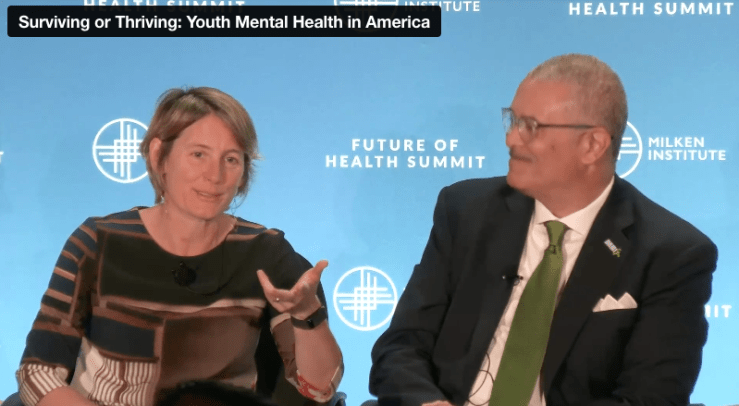
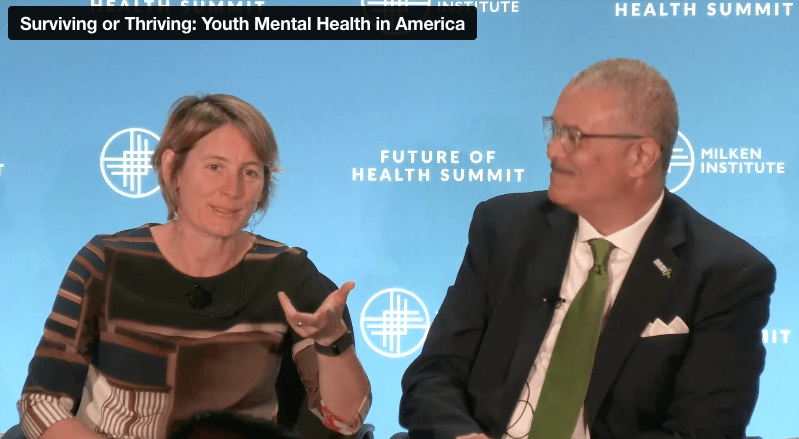
Milken Institute Future of Health Summit: Surviving or Thriving: Youth Mental Health in America

Milken Institute Future of Health Summit: Surviving or Thriving: Youth Mental Health in America
6 November 2023
Washington, DC
Panel
“Surviving or Thriving: Youth Mental Health in America”


Obi spoke on a panel hosted by William Brangham of PBS NewsHour, alongside Daniel Gillison, CEO of NAMI, Amanda Grigg of the National Academies of Sciences, Engineering and Medicine, and Kacie Kelly of the Meadows Mental Health Policy Institute.

Children and youths, affected deeply by the COVID-19 crisis, are reckoning with a different kind of epidemic. Pervasive depression and anxiety, rising rates of substance misuse, increasing isolation and loneliness—all are contributors to the sad status quo. Society must find ways to address the needs of younger generations, both outside and inside the classroom, to ensure a healthy and thriving future. Join specialists and advocates to chart a new path with solutions that will prove durable over time. 

Watch the recording here:

https://milkeninstitute.org/panel/15029/surviving-or-thriving-youth-mental-health-america

Business Insider: Inside a secret haven for startup founders to overcome loneliness: ‘There’s very few people you can be honest with’

By Darius Rafieyan

This article was published on Nov 2,2023
Copyright Business Insider 2023
Read the original on BusinessInsider.com (subscription required)

  • Leaders In Tech is a four-day, invite-only retreat for tech founders and CEOs held in Northern California. 
  • The retreat is the brainchild of author and executive coach Carole Robin, and is based on the Interpersonal Dynamics course she taught at Stanford Business School. 
  • The retreat, which costs about $10,000, is meant to help participants open up and cope with the loneliness of helming a prominent tech company.
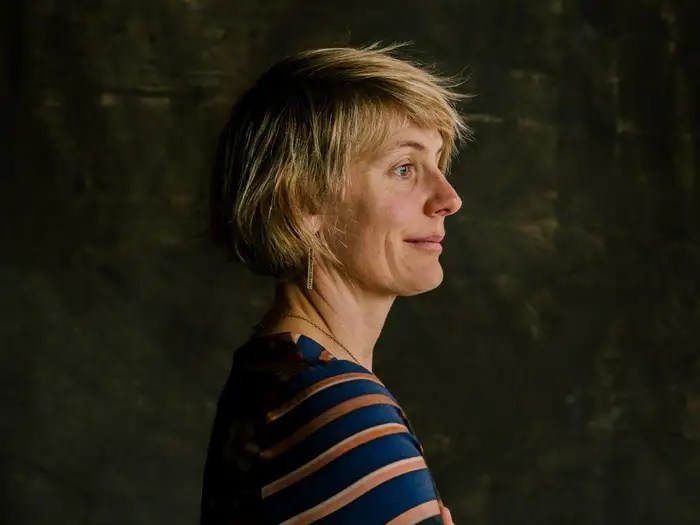
Obi Felten, founder of Flourish Labs
Startup founder Obi Felten said she struggled to find spaces where she could let her humanity show.
Photo: Justin Kaneps

On a recent weekend, at a seaside resort outside San Francisco that once served as a pleasure palace for a turn-of-the-century radio mogul and later became the home of a sinister, new age cult, twelve perfect strangers sat in a circle overlooking Tomales Bay.  

As the sun glinted on the water and a breeze off the wetlands shook needles loose from the pines overhead, Joe—founder and CEO of a fintech startup most recently valued at $45 million, who opted not to use his real name for this story because of the personal nature of what he was speaking about—recounted the day last year that his father died. He had been devastated, but didn’t feel like he could take a day off. His company was in the middle of raising a funding round and he just couldn’t let his team down. There was no time for grief in his busy schedule.

Joe knew next to nothing about the people he was confiding in, not how many exits they’d had, nor who their investors were. He didn’t even know their last names. But he knew they were all founders and that they understood, and so he did something he hadn’t allowed himself to do in a very long time: he cried. 

“Once the words came out, I was emotionally exhausted, but I was also relieved,” Joe said. 

This was day one of Leaders In Tech, a four-day, invite-only retreat for startup founders like Joe, designed to help them open up, process trauma, and learn to cope with the loneliness that comes with helming a prominent tech company.

The program is the brainchild of Carole Robin, an author and executive coach who for more than 20 years taught the Interpersonal Dynamics course at Stanford Business School. 

Carole Robin, co-founder of Leaders in Tech
Author and executive coach Carole Robin, speaking at a Leaders In Tech retreat. 

She says that founders are expected to be relentless optimists, and impervious to doubt. Whether it’s their investors, their employees, or even their spouses, the pressure is always to tell a story that goes up and to the right. 

“They don’t have anybody they can be real with,” Robin told Insider, “so they’re always having to spin their image, and spin what they say, and spin how they’re seen, which adds to the loneliness and the sense of isolation and also frankly, mental illness.”

A mental health crisis for founders

The data on founder mental health is spotty (most don’t like to advertise their struggles) but a 2015 survey of entrepreneurs from UC Berkeley found that 72% reported mental health concerns (for comparison only about 20% of the general population suffers from mental illness). Entrepreneurs in the survey were significantly more likely to report suffering from depression, bipolar disorder, anxiety, and substance abuse disorders.

These challenges have always been a fixture of the founder’s life and something of an open secret in Silicon Valley, but they’ve only been exacerbated by the recent market turmoil.

Some founders deal with the pressure by microdosing ketamine, or doing 48-hour fasts, or riding double-decker bicycles through the desert at Burning Man. But for many, even admitting that they’re struggling can feel impossible. 

“You run into people at conferences and you talk about how everything’s great,” said Obi Felten, a former Google executive and founder of mental health startup Flourish Labs who attended a retreat last month. “You go through this whole bullshit, but there are very few people that you’re truly honest with,” she said.

With Leaders in Tech, Robin set out to create a space for founders to practice vulnerability, free of the need to always be crushing it. 

Lodge at Marconi
The Leaders In Tech Retreat provides a world away from the relentless stress of Silicon Valley. 

It’s open to founders and CEOs who have raised at least a Series A but are pre-IPO, who for about $10,000 can spend four days in a charming bungalow on the grounds of the Lodge at Marconi resort in Marshall, California. Days are spent in intensive emotional labor with nights devoted to communal dinners and gatherings around the fireplace.

‘If you really knew me’

Participants meet in groups of 12, carefully selected to ensure no one is paired with a competitor or potential investor. Pitches, resume rundowns, or anything that smacks of networking is strictly forbidden.

“They’re being real. Nobody’s trying to sell anybody anything, nobody’s trying to raise money from anybody else,” Robin said. 

They spend up to twelve hours a day in intensive “T groups” (Robin is quick to say the T stands for training, not therapy) where facilitators lead exercises designed to break down barriers and foster authentic connections. 

For example there’s something she calls “If You Really Knew Me”—an exercise where founders talk about themselves for two minutes, beginning with the phrase “if you really knew me…” 

Some responses from founders Robin remembers from past sessions:

“If you really knew me, you’d know that I feel like I have to put on a suit of armor every single morning when I leave the house.”

“If you really knew me, you would know that I’m, I’m worried about whether or not my marriage is going to survive my startup.”

“If you really knew me, you’d know that I will not sit here for four days and listen to everybody talk about how they’re crushing it.” 

For Felten the retreat provided a welcome antidote to the transactional artificiality of networking events. 

“In the first session we all exposed and disclosed stuff about ourselves that probably even some of our best friends or our partners might not know,” she said. 

During her retreat Felten focused on anger, an emotion that as a female CEO she felt she was never allowed to express. On the second day in her T group, as she was opening up about her family’s struggle with addiction and mental illness, she exploded at one of the other participants. 

“And I remember in the moment thinking, oh my god, I’m doing the thing that’s not okay to do, I’m getting angry,” she said. But rather than shut down her raw emotions, the other members of her group helped her process that anger and see that it was really just an expression of fear. 

“Unpacking it in that safe environment was a massive breakthrough,” she said. 

That evening after dinner, Felten went for a swim in the icy waters of Tomales Bay. She said the cold plunge felt like a much-needed reset after the hours of grueling emotional work. Floating out there in the Pacific, she was only two hours from Menlo Park but somehow a million miles from Silicon Valley.

Felten’s first day back at work after the retreat was rough. Her husband was out of town and the day started in a fight with her daughter that made her late for the Monday meeting. Feeling the anger bubbling up again and remembering what she learned in her T group, she decided to open the meeting with her colleagues by talking about what a hard time she was having. Others jumped in, commiserating about frustrating boyfriends and intractable children. Multiple employees later thanked her for creating the space to show weakness.

For Joe, the fintech founder, the plan had been to return to work Monday morning after the retreat. Instead just a few days after he broke down talking about his father, he did another thing that he hadn’t allowed himself to do in years: he took a day off for himself.

“Normally I would just dive back in,” Joe said, “but I remembered something someone in my T group said, they said, “you’re always taking care of everyone else, who’s taking care of you?”

From crisis to connection: professional peer support is our answer to the youth mental health crisis

Peers.net brings professional peer support to youth across America, now available for teens and integrated into Scout by Sutter Health

Somewhere not too far from where you’re reading this, there’s a teenager at a hospital emergency department navigating a mental health crisis. Most likely, they’ll be released after sitting in the emergency room for several hours. According to guidelines, they are supposed to be seen by a mental health professional within seven days after being discharged from the emergency department. In reality, less than one in three young people get any follow up, and one in four will return to the emergency department within six months (Hoffman et al, 2023). 

The teen and their parents will leave the hospital and try to figure out next steps. They will likely struggle to find a therapist that has free appointments, is affordable and can relate to the teen. Many just give up.

“Youth mental health is the defining public health crisis of our time.”

— Dr. Vivek Murphy, U.S. Surgeon General

The United States is in the midst of a mental health crisis, with a severe shortage of mental health providers. The US has just over half a million therapists. We would need to more than double the number of providers to ensure everyone can access the care they deserve, and demand is growing faster than new therapists are being trained. The gap between need and care is most pronounced among young adults. 46% of young adults experienced substance abuse or mental illness in 2021, and 55% of those received no care (SAMHSA National Survey 2021). Youth is a critical time for intervention, in 75% of cases the first onset of mental illness is before the age of 24 (Kessler et al, 2005). U.S. Surgeon General Dr. Vivek Murphy has called youth mental health the defining public health crisis of our time.

Shot of a young female student sitting on the floor feeling depressed on campus

Professional peer support is our answer to the youth mental health crisis

My cofounder Dr. Kim Newell Green practiced as a pediatrician at Kaiser Permanente in San Francisco for over a decade and saw first hand how her teen and young adult patients struggled to access timely, age-appropriate mental health care. I first experienced the power of peer support two decades ago when my boyfriend was diagnosed with bipolar disorder. Peer support is backed by evidence and rooted in human connection, but has not yet been scaled. Mental Health America estimates that there are under 25,000 Peer Support Specialists who do peer support as a job.

What was lacking was a way to scale training to bring more people into the peer support workforce, and a robust and secure telehealth offering that fits within the healthcare system and can reach youth anywhere, not just in urban centers. We founded Flourish Labs to do just that.

“We’re on a mission to scale professional peer support with the help of technology to address the mental health crisis.”

We expand the mental health workforce by hiring and training young adults with diverse backgrounds and past experience of mental health challenges to become certified Peer Support Specialists. Our proprietary online training fulfills state and national certification standards and was developed together with experienced peer supporters, online learning experts, and young adults.

On Peers.net, our HIPAA-compliant telehealth platform, youth can book a 1-on-1 session with a professional peer supporter of their choice, on demand. Our professional peer supporters provide emotional support, teach skills, and share their knowledge and personal experiences dealing with depression, anxiety, trauma, stress, body image issues, LGBTQ+ questions, and more. 

Many studies showed that peer support is effective to help people reach recovery and live fulfilling lives. Perhaps more surprisingly, it can also help the supporter stay in recovery (Johnson et al, 2019). By offering training and jobs to people in recovery, we create a virtuous cycle and turn a huge problem into a huge opportunity: 58 million adults have a mental health diagnosis in the US today. If we can help even a fraction of them to reach recovery and train them to work as Peer Support Specialists, we will dramatically expand the mental health workforce.

We’re not alone in our belief that professional peer support can bridge the gap in mental health care. Mental Health America, the Biden Administration, and the US Governors Association among others have all made it a priority.

We were fortunate to be backed by great investors at Gradient Ventures, Collaborative Fund, Learn Capital, WGU, Tiny VC and One Mind, as well as operator angels from healthcare companies who are helping us build our vision.

Built for young adults – and now teens!

We launched an early version of Peers.net in late February 2023 and have been learning from hundreds of young adults who tested our service and gave us feedback in our user research studies.

We learned that they love being able to choose their peer supporter along dimensions that matter to them. Many therapists look like my cofounder Kim and I: middle-aged cisgender straight white women.

Dr. Kim Newell Green (left) and Obi Felten (right), Flourish Labs founders

Gen Z and Millenials are more diverse than any other generation before, and they want to connect with someone closer to them in age who shares their identity and life experiences. Our Peers.net supporters are young adults aged 18 to 35; more than half of them identify as LGBTQ+ and/or BIPOC.

Here is what our beta users have said:

“I highly enjoyed the session. Overall, I felt supported, heard, and appreciated. More importantly, I shared common ground and felt a sense of belonging with my Peer Supporter.”

“My peer supporter was lovely and an absolute joy to interact with. I felt that my issues were heard and that the intersectional factors that impact my well-being was seen. She created a wonderful list [of tools] with me that I look forward to applying moving forward.”

“I am very blown away at how effective it was for me to just talk to someone about my troubles. I have recently stopped therapy due to financial constraints, but after going through today’s session I decided to continue on with the peer supporter I chose in the coming future because I found it so helpful.”

We learned that not all of them want to be on video, so we’re allowing sessions to be off video/audio only, and are working on adding text-based messaging.

We also got one question over and over again:

“When are you opening up to teens?”

We’re excited to launch the official version of Peers.net today, and open up to teenagers for the first time. This means we’re now providing Peers.net support to everyone between the ages of 13 and 30.

Built for healthcare: Announcing our partnership with Sutter Health

As we expand, our goal is to make professional peer support part of the standard of care in mental health. To do this, we chose to work within the healthcare system and to healthcare standards, including our HIPAA-compliant platform. We ensure quality, manage risk and measure outcomes via a combination of experienced supervisors and AI. 

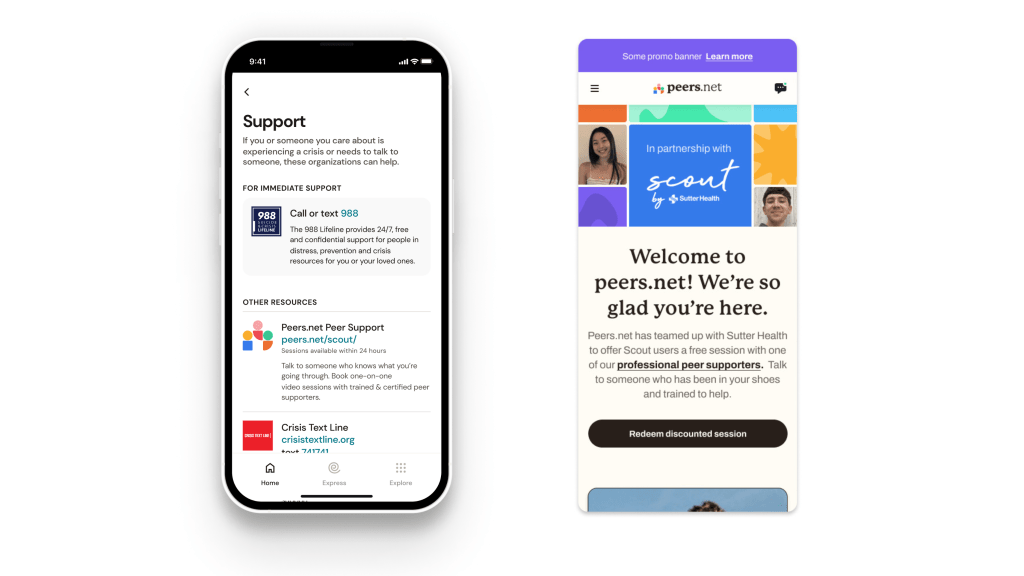
For provider groups, schools and health plans, Peers.net unlocks rapid access to 1-on-1 support across the spectrum of mental health needs. This might be a youth leaving the emergency room or an eating disorder intensive outpatient program, or a first generation student looking for support during stressful exam times. Our first healthcare partner is Sutter Health, who are today announcing the launch of their Scout mental health app for teens and young adults. Scout by Sutter Health™ offers evidence-based tools, exercises and resources for self-care. While designing Scout, the Sutter Health team found that some users were looking for rapid access to 1-on-1 human support in addition to the app, and chose to partner with Flourish Labs to provide this. As of today, Scout users can access Peers.net with one click from the resources page within the app.

To celebrate the launch, we’re offering Scout users a free Peers.net session, for a limited time only. Peers.net users will get a free Scout app membership.

Join the peer support revolution

We hope this will be the first of many partnerships where we work with health systems and provider groups to integrate our peer support into their care model. Our goal is to partner with Medicaid and commercial insurance plans to make peer support routinely reimbursed like other mental health services.

While we work on getting our health plan partnerships in place, we made Peers.net affordable at $65 for a 50 minute session – about half the cost of therapy. If you are a parent, fairy godmother, thoughtful older sibling or just looking out for a friend, you can buy a gift card and save up to 20% on a bundle of sessions.

We’ll also be working with community organizations to make discounted or free sessions available to their teen and young adult members; we will announce this later this year. Please get in touch if your organization would like to be included in this program.

With partners like Sutter Health, Flourish Labs is helping to bring about a future where affordable, quality mental health support is available to everyone who needs it. A future where teens, young adults and their parents no longer have to face these challenges alone.

By addressing the workforce gap and offering a scalable solution to the youth mental health crisis, we are rewriting the story from one of crisis to one of empowerment, where youth who experienced mental health challenges first-hand become part of the mental health workforce, help others, and help themselves stay in recovery.

If you recognize yourself or someone you love in this story – as someone who needs support or could provide support, as a community organization who wants to provide support to your members, as a provider group or health plan who wants to expand access and lower costs – please join us at Peers.net and be part of the revolution.

Freakonomics Radio: Steve Levitt’s “People I mostly Admire”

4 August 2023
Podcast
“Can a Moonshot Approach to Mental Health Work?”
Obi Felten used to launch projects for X, Google’s innovation lab, but she’s now tackling mental health. She explains why Steve’s dream job was soul-destroying for her, and how peer support could transform the therapeutic industry.

5 surprising things I have in common with economist Steve Levitt

Freakonomics co-author Steve Levitt and I had a great conversation on his “People I (Mostly) Admire” podcast, on everything from dream jobs and fantastic failures, to the power of mental health peer support and the fall of the Berlin Wall. These are topics close to Steve’s heart, so I also learnt quite a bit about him—including some surprising personal parallels!

Freakonomics co-author Steve Levitt recently invited me on his ‘People I (Mostly) Admire’ podcast. Our conversation ran the gamut: we discussed everything from dream jobs and fantastic failures, to the power of mental health peer support and the fall of the Berlin Wall. These are topics close to Steve’s heart, so I also learnt quite a bit about him—including some surprising personal parallels!

Here are 5  things that Steve and I have in common. The last one especially was a surprise!

  1. We are not afraid to fail because we prioritise learning. Steve tries out more projects than the average academic. I’ve worked on many failed projects in my career. We talk about some of my favourites on the podcast, like Project Loon and Project Foghorn at X. We both continue to prioritise learning over a fear of failure in our roles today!
  2. We have close family members who struggled with serious mental illness, leading us to care deeply about mental health. Having experienced the power of peer support, both giving it and receiving it, we are curious  about the science: what makes therapy and peer support effective, and how someone with much less training than a therapist can help others recover.
  3. We had the same business idea. We both imagined matching people experiencing mental health struggles with peer supporters who have gone through the same. When Steve’s daughter Lily shared her experience recovering from an eating disorder on Instagram, she got countless DMs from other teens asking her for help. Steve never got around to setting up a peer support marketplace, and was delighted to discover that I set one up at peers.net! 🙂
  4. Our worldviews have been shaped by experiences with US and German culture, at different points in our lives. Steve’s wife is German and he lives there now. I grew up in Berlin, went to the US as a high school exchange student as a teenager and almost missed the wall coming down, which we also talk about on the podcast.
  5. We both have imposter  syndrome. (Wait, what??? Steve Levitt has impostor syndrome!!) On the podcast, Steve wonders how many of his podcast listeners really feel like imposters, so he invites them to send a one line email to PIMA@freakonomics.com saying either “imposter” or “not an imposter”. I’m curious how many of you feel that they’re an imposter. If you’re brave enough to share openly, please let me know in the comments! 

Thank you Steve, Morgan and the PIMA team for the enjoyable, interesting and sometimes challenging conversation.I was nervous at the beginning of the recording (imposter!!!!), sitting in a dark studio in San Francisco talking to Steve halfway across the world. By the end Steve and I could have chatted for two more hours. Mental health and peer support are complicated to unpack. The podcast format was perfect for it, especially since Steve had a personal connection. 

I’d love to do more podcasts on the topic of mental health and peer support, for example: How peer support works with other modalities/solutions to the mental health crisis, a deep dive on the science of peer support, hearing from others with lived experience of mental health challenges for whom peer support  has worked, and whether a chatbot could ever deliver proper peer support (which is  as much a philosophical as a technical question).

What conversations about peer support and mental health would you like to hear on a future podcast? Get in touch here and let me know!

You can listen and find the transcript on the Freakonomics website here, or download the episode on Apple PodcastsGoogle PodcastsSpotifyStitcher, or wherever you get your podcasts. 

I’d love to do more podcasts on the topic of mental health and peer support, for example: How peer support works with other modalities/solutions to the mental health crisis, a deep dive on the science of peer support, hearing from others with lived experience of mental health challenges for whom peer support has worked, and whether a chatbot could ever deliver proper peer support (which is as much a philosophical as a technical question).

Digital mental health is in its infancy, and I’m excited to see what it can do when it grows up.

Thomas Insel MD has just written “What’s next for digital mental health companies?” in Stat News, a brilliant thought piece on the state of digital mental health. He cuts through some of the hype surrounding mental health startups fuelled by $5.1 billion in venture capital investment in 2021, while pointing to the infinitely larger potential of applying technology to improve a system that today fails most people with mental health problems.

It’s a testament of how limited mental health services are today that mental health startups are growing so fast by doing relatively simple things like moving clinicians from an office to a screen and helping them accept insurance. It is a great start, improving access to mental health professionals outside major cities and making the process of finding a clinician more efficient. Locating a therapist or psychiatrist who accepts insurance and has availability was nearly impossible before SondermindHeadwayAlmaSpring HealthLyra HealthModern Health and Cerebral came along. However, most of those startups target people who have private health insurance and/or generous employer benefits, leaving the majority of the US population just as underserved as it was by the old system. In 2020, only 6.6% of Americans had mental health outpatient services paid for by their employer, 39% by private health insurance, over 40% paid out of pocket (SAMHSA survey). Merely moving the same pool of clinicians online also doesn’t solve the fundamental problem that we have far fewer clinicians than we need: a shortage of 6,984 according to the latest HRSA numbers, which is probably an understatement.

I agree with Tom that the digital mental health industry – and digital health more broadly – is in its infancy. I worked in financial services and retail when they were being transformed by technology in the late 1990s and early 2000s. Healthcare is 20 years behind those industries. One key factor in retail and finance moving faster was that consumers have a lot more power and choice in those industries; they voted with their feet and moved towards better offerings quickly. My first startup job was at one of the ecommerce darlings of the time, eToys, which was backed by big VCs like today’s mental health startups. I didn’t understand until much later that we weren’t in the business of selling toys; we were in the business of providing a better customer experience through technology. Instead of hunting around mall toy stores for that hot out-of-stock-everywhere toy, grandparents could have it delivered straight to the kid’s home, gift-wrapped. During the holiday season the whole company worked in the warehouse to make this happen.

I also share Tom’s optimism that technology has the potential to truly transform mental health care. His point about measurement and accountability reminded me of my early ecommerce experience. I remember when web analytics companies invented page view and session metrics in the early 2000s. Before then we were measuring ‘server hits’ (a thoroughly useless metric) and had no idea what happened between a user coming to our website and placing an order – or more often leaving without placing an order. Along came sophisticated web analytics, and it was like a light switch being turned on. We could see what our users were doing on the website, which pages and features were a success and which needed improvements. As product managers started running A/B tests and using behavioural data to make product decisions, consumers were able to shape products in a way that had never happened before.

Like retail before web analytics, mental health is barely measured in clinical practice today, despite a proliferation of scales. Eiko Fried, a professor at the University of Leiden who studies mental health measurement, analysed the content of 7 leading depression scales and found 52 disparate depression symptoms (Fried 2017). The most commonly used measurement tools are questionnaires like PHQ-9 and GAD-7, which Pfizer generously made freely available to help doctors assess whether a patient needs medication 🤔. These surveys ask questions such as: “How many days in the past 2 weeks have you been feeling bad about yourself — or that you are a failure or have let yourself or your family down?” and “How many days have you had trouble falling or staying asleep, or sleeping too much?” Humans are not very good at self-assessing and tracking these data points over time; technology can help here. A new crop of mental health measurement companies like Ksana HealthHealthRhythms and Kintsugi are working on more accurate ways to measure mental health, using passive sensor data from smartphones, daily surveys called ecological momentary assessments (EMA) and voice diaries. My company Flourish Labs is developing håp, an app combining short EMA-style self-reflections that we call Check-ins with sleep data from wearables to help our members track their own mental health and wellbeing. Our app is still in beta and we’re evolving it with active input from students (our first user group), with the help of our partners Active Minds and Youth Era.

eToys went bust in 2001, as did many other ecommerce pioneers along the way. Today, ecommerce is nearly 25% of the world’s retail sales, and nearly 40% in early adopter countries like the UK. Amazon went on to a build huge business with a relentless focus on better customer experience and analytics. Some argue that the major tech companies are overdoing the analytics and user tracking these days, but there is no doubt that it has led to vastly better (and free) products and experiences for users. Mental health and wellbeing data is more sensitive than your shopping basket content and browsing habits, so as a young industry we have to be much more thoughtful on how we use data to benefit people who want to improve their mental health, with their permission.

It will be interesting to see who emerges as the Amazon of digital health. Amazon being one of the contenders of course… although I’ll place my bet on a startup that nobody has heard of yet today.

Introducing håp: a self-tracking app that fosters human connection

I posted this originally on the projecthap blog. I am reposting it here because it’s a big deal for me personally to have a beta version of our first product out. I love getting the first feedback on what we’ve built, it never gets old!

Three months ago I left my job in a big tech company to set up Flourish Labs, a purpose-driven startup using cutting edge mental health science and technology to foster good mental health. Our mission: Flourishing minds for all, starting with students.

Today we’re launching the beta version of håp, an app that helps you understand the ups and downs of your mind. håp is for everyone, whether you are flourishing or languishing right now. It’s using technology that you likely have with you at all times: a smartphone and a wearable device.  

håp empowers you with your data to help you gain more emotional self-awareness.

The håp app encourages you to regularly check in with your feelings, your mood and other factors such as your motivation, sleep, mental focus and social interactions.

Think of a håp ‘Check-in’ as a twice daily activity, just like brushing your teeth. It only takes about a minute (and you could probably do it while you are brushing your teeth if you’re pressed for time).

You can instantly view your data in easy to understand reports, charting how the factors that affect your mental health and wellbeing change over time. 

Unlike simple mood diary apps, håp can also integrate your sleep, activity and heart rate data if you have a wearable and choose to connect it to håp. This is optional; you can use håp with just a smartphone. We currently support Fitbit and Oura, and will add more wearables soon.

You control what you share with håp. håp empowers you with your data to help you gain more emotional self-awareness.

håp brings you human connection when it’s most important for you.

In addition to self-tracking, håp is being designed to foster support from others. During 18 months of lockdowns and physical distancing from friends, extended family and co-workers, we have all experienced how vital human connection is for good mental health.

In the beta version released today, håp gives you instant access to free, 24/7 crisis support. With the tap of a button or by texting HAP to 741741, you can text with a trained Crisis Text Line counselor.

You can also view mental health and wellbeing tips and resources from Active Minds.

If you are a student at one of our pilot colleges, the app will show you mental health and wellbeing resources that are available on your campus. 

Soon, håp will allow you to share some of your data with a small number of people of your choosing. These could be friends, family or others in the håp community who want to support you. Unlike anonymous peer support platforms, håp facilitates ongoing connections with people you know and trust. håp reduces the burden of reaching out to get or give help by notifying your supporters, and encouraging them to get in touch when it looks like you might need it. Or if you’re doing well at the moment, the håp support notification might just serve as a reminder that they haven’t caught up with you in a while and it’s time for a chat.

You control who you share with. håp brings you human connection when it’s most important for you.

håp is being built with students, for students.

College students are our first audience for håp. During our pilot, håp is available only via our partners or by referral. 

håp, like all of us, is a work in progress.  We’re releasing it as a beta app today because we want to get early feedback from students and colleges on what we’ve built so far, and get input on the parts we’re building next. 

If you are a student, you can get early access to håp and help håp get better by joining our Trusted Tester program. We have a limited number of slots, so please bear with us if we don’t get back to you straight away.

Each screen of the app has a ‘feedback’ icon on it. For each app release, we will share how we’ve addressed feedback from testers, so you get to see how you are helping to improve håp first hand. 

Bring håp to your college.

We are inviting a small number of colleges to actively take part in our pilot during the 2021/22 academic year. We are looking for innovators who want to offer the opportunity to their students and staff to test and help evolve the product. We’d especially love to work with community colleges and HBCUs.

If you are a student, you can bring håp to your college as a håp Ambassador.

If you are faculty or staff, please get in touch to explore how we could include your college in our pilot

Project håp is a collaboration between a tech startup, nonprofits and academics.

We have come together to work on håp because we share a vision of a future where more people flourish in a world of good mental health and wellbeing. 

Flourish Labs is a purpose-driven technology startup building the app and technology platform with a small but mighty team and the help of a multi-faceted advisory board. 

Active Minds is the leading nonprofit organization supporting mental health awareness and education for young adults. Led by founder Alison Malmon, they are our co-design and outreach partner.

Youth Era is a global leader in empowering young people and creating breakthroughs in the systems that serve them. Through peer support and technology, Youth Era equips young people with tools to help themselves and their peers. They are designing a bespoke training program for håp members who want to become supporters.

Crisis Text Line provides free, high quality crisis support through text messaging. Trained, compassionate Crisis Text Line crisis counselors are available 24/7 for any crisis, not just suicide.

Stanford professor Dr. Manpreet Singh will lead an independent research study on håp. Each part of håp is grounded in evidence, but our combination of self-tracking and peer support is novel. Dr Singh and her team will study the validity of håp as a measurement tool for mental health, wellbeing and flourishing, and assess its impact on them.

If you are an individual or foundation interested in supporting the work of our nonprofit partners or the research study with a grant, please get in touch.

Each partner in our multi-disciplinary team brings their energy, unique experience and insight to håp, and I’m excited and grateful every day to be working with them. We invite you to bring your own experience to håp by joining us on the journey as a Trusted Tester, håp Ambassador or pilot college.

You can learn more at projecthap.com. We can’t wait to hear what you think of håp and your ideas on how to make it work for you.