Betrayal and Love

This week is my 15 year anniversary of joining Google. Emi Nietfeld recently wrote a nuanced op-ed in The New York Times about her experience as a software engineer at Google, from joyful beginnings to being harassed by a coworker and the miserable aftermath of her speaking out about it. She talks about being in love with Google when she first joined, and that love being slowly drained away by her bad experience. I have been thinking about her story since she published it, and it provoked some of my own reflections that I am sharing here.

I have been lucky to not experience sexual harassment myself, but it happened all around me during my career in consulting, retail and tech. Over the years I learnt to recognise the signals and gained the confidence to speak out about it: to others on the team, to HR, and sometimes talking with the harasser directly. Showing the victim that we believe them and that they are not alone is perhaps as important as having a due process to deal with the harasser.

I did experience plenty of sexism. Two incidents that happened twenty years apart I remember vividly because they felt like a betrayal. In both cases I was completely taken by surprise.

1/ The time I got a bad performance review in my first job in consulting. 

There was one female (me) and one male analyst on the team. I was sent out to interview traders on the bank’s trading floor about their job, so we could figure out how to reduce costs. The male analyst did the spreadsheet work. At the performance review, my work was dismissed as ‘soft’, whereas my male colleague was rewarded for doing ‘great analysis’. I was furious, felt dejected and nearly quit. My mentor, a senior partner and elder statesman at the firm, talked me into staying. (Side note: Your mentor does not need to look like you.)

Two months later, the partner who had signed off on the bad review pulled me into his office because the firm had just landed its first internet strategy project. It was 1997, and he didn’t know what ‘the internet’ was or how it worked. I explained it to him, and he asked me to join the project team. I got a great review on that project. Afterwards I was only staffed on internet strategy projects (no more boring cost cutting!), and eventually left the firm to join an ecommerce startup in 1999. Looking back, I’m glad I didn’t quit in 1997. 

2/ The time I was told to dress more like an executive. 

In an anonymous 360 review, a colleague commented that if I wanted to be taken seriously, I should dress more like an executive. The person suggested I dress like Ruth Porat, the CFO of Alphabet. I didn’t know whether to laugh or to cry. I admire Ruth deeply, and she has joked about how all the women in her generation wore suits with big shoulder pads to dress the part when she started her career on Wall Street. But this wasn’t banking in 1987. This was X, the moonshot factory in 2017, where most of my male peers wore t-shirts and flip flops, and our boss Astro Teller glided around on rollerblades. I chose to ignore the advice. 

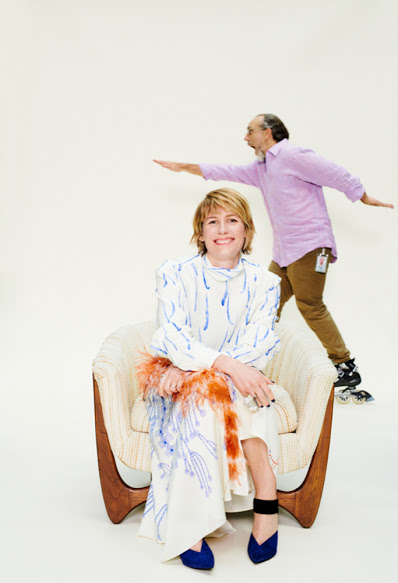
When my VOGUE article came out, I felt vindicated. It proved beyond a doubt that I was capable of dressing like an executive – with a little help from a VOGUE stylist, make-up and hair artist. During the cover shoot (one of my most fun days at the office ever), the photographer caught Astro photobombing into the shot on his rollerblades. The playful picture made it into the magazine with a tongue-in-cheek caption: X CEO Astro Teller took the VOGUE Business premise “Women in the foreground” literally and photo-bombed himself cheerfully into the background. I had a print framed and gave it to Astro as a present. He proudly displayed it outside his office. Whenever I walked past it, I smiled as I remembered that 360 review.

Photo: Rainer Hosch

Emi Niedfeld’s story felt sadly familiar, echoing Susan Fowler’s post about her experience at Uber and many #MeToo stories in tech and elsewhere over the years. Yet, I believe that we’re making progress as an industry and as a company. At X, we have a thriving community of Women of X who support each other; women like Diana Skaar who recently shared about her experience as an Asian woman in tech. We have strong allies, starting from the top with X CEO Astro Teller and COO Tom Tweddell. Astro and Tom have made equity, inclusion and diversity a company priority and champion the work that was started by Gina Rudan and is now led by Rachel Williams. Gina and Rachel are incredible leaders whose creativity and persistence drives change every day.

Love is a competitive advantage.

What really depressed me about Emi’s piece is her conclusion that she can’t fall in love with a company anymore. I recognised myself in her description of being so in love with the company when I first joined Google London in 2006. It felt like a family, not like a company: working hard and having dinner in the office, amazingly fun offsites, a shared mission and purpose. As Emi points out, it was also all-consuming and sometimes hard to detach. I struggled to let it be just a job, not my life. I learnt to draw boundaries, for example starting my work day at 10am so I could have time with my baby son in the morning, since I spent most evenings in the office on video calls with California.

During my career I have fallen in and out of love with most of my jobs. Sometimes the love lasted only a few months, but often I had a few good years. I was still in love when eToys went bankrupt and died in 2001. When the love withers, it’s time to move on, as with any relationship. You don’t have to leave immediately: in a recent podcast on how to rethink bad decisions Adam Grant interviews Janice Burch who made herself a 1 year exit plan to leave the company she didn’t thrive in.

I haven’t given up on love, quite the contrary. My friend Stephen DeBerry often talks about love being a competitive advantage. It might feel out of place to use the word love in a corporate environment; at worst it conjures up associations with harassment. What Stephen is talking about is having meaning and joy in one’s work, and connection with others. Studies have shown that supportive work environments reduce workers’ stress and even mortality. Google’s Project Aristotle research found that psychological safety, a concept first described by Harvard professor Amy Edmondson, is the most important predictor of team effectiveness. Psychological safety is reciprocal. Brené Brown‘s research shows that having the courage to show up vulnerably encourages others to do the same. Serving others often leads to our own success, as Adam Grant argues in his book Give and Take.

We spend more waking hours with our colleagues than with our families. I always want to spend this time doing something I love. I want to be with people I love and feel connected to, in my personal life and in my work life. If I don’t love what I do and the people I work with, why am I doing it at all? How can it possibly be my highest and best use? 

Ruth Porat asked me this when I came to her for career advice once: “What’s your highest and best use?” What is it that only I can do, and where will I have the biggest impact? The phrase has stuck with me ever since. I ask myself frequently, and I ask the women whom I mentor and sponsor. I didn’t end up dressing like Ruth – although these days she is seen in a puffer vest more often than in a pinstripe jacket -, but I did take her career advice.

Perhaps
we should love ourselves
so fiercely
that when others see us
they know exactly
how it should be done

Rudy Francisco

#womenintech #womeninstem#loveisacompetitiveadvantage 

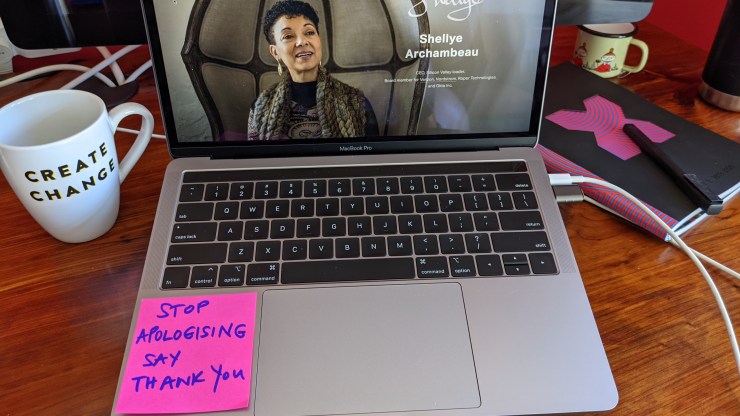
Stop apologising. Say thank you instead.

That was the message I got from Shellye Archambeau this week who shared her life and work lessons in a fireside chat with Xers.

Shellye is an extraordinary leader who worked her way up from intern to tech CEO and board member during a time when there were even fewer women in tech than today, and even fewer Black women. A woman in tech trailblazer and true role model, she just published Unapologetically Ambitious, a book that shares her roadmap on taking risks, breaking barriers, and creating your own success.

One of the points Shellye makes is that women and people of colour tend to apologise too much. Instead of saying “Sorry I am late”, she recommends saying “Thank you for your patience.” Saying thank you is gracious without putting yourself down.

In the 24 hours after Shellye’s talk, I caught myself apologising several times: to my team that I was late with some work because my Macbook died, to people whose email I hadn’t replied to straight away, to my husband, to my daughter for asking her to hurry up and brush her teeth. I changed to “thank you” when I noticed it in time, but several times my apology habit got me. I noticed my feelings when this happened: Apologising doesn’t do anything to alleviate my guilt, even if the other person accepts the apology. Saying thank you always makes me feel better, and I feel more connected to the person I’m thanking.

Studies have shown that a regular gratitude practice really does increase happiness. I want less guilt and more gratitude in my life. Since many of my human interactions are through my laptop these days, I have stuck a big note on it to remind me to stop apologising and say thank you instead.

Thank you to Helen and Angelie for bringing Shellye to X, the moonshot factory. We’ve hosted some extraordinary female leaders as part of our ongoing speaker series (Celeste Kidd‘s talk was another standout for me), but Shellye’s message really struck me.

Thank you, Shellye, for giving me the nudge I needed, and sorry I haven’t finished your book yet. (Just kidding!)

#UnapologeticallyShellye #UnapologeticallyAmbitious #stopapologising #justsaythankyou #womenintechnology #blackwomenintech

This article was first published on LinkedIn Pulse on 4 February 2021. Please comment there.

Empowering students and clinicians with mental health data

A user research report report on opportunities for tech-enabled innovation in student mental health from Shift and X.

Recently I wrote about Amber, the early stage mental health project I led at X. We developed prototype technologies to better measure mental health, including a low-cost, portable, research-grade system to make it easier to collect electroencephalography (EEG) data, and machine learning methods to make it easier to interpret these data. We wrapped up our work at X and made our technology and insights freely available to the mental health community. You can read more about Amber’s story and access our technical resources on the X blog.

Today we are sharing a report on the user research with students and clinicians that we conducted between 2018 and 2020 in partnership with Shift, a social innovation charity.

Project Amber asked the question: what if we could make brain waves as easy to measure and interpret as blood glucose, and use the results as an objective measurement of depression? From my undergraduate degree in psychology I was familiar with EEG, a 96-year-old technology to measure electrical activity in the brain. Today EEG is primarily used in neuroscience research labs and epilepsy clinics. Making EEG more accessible and usable at scale would open up a host of possibilities to deploy it in primary care, counselling and psychiatry. We had a promising technology, but we had to identify specific user needs to figure out how the technology could impact real-world problems.

We started with informal user interviews, with clinicians and people with lived experience of mental health problems. We spoke with primary care physicians, therapists, counsellors, clinical psychologists, psychiatrists, and social workers. We spent time with young people and their parents, mothers who experienced perinatal depression, and people who had struggled with depression all their life.

In one of my interviews with a physician working in a primary care practice at a London university, I first learned about the huge unmet need in student mental health.

Me:  “What percentage of your patient visits are about mental health?”

Dr M:  “Seventy percent.”

Me: “Did you say seventeen?”

Dr M: “No, seventy. Most of my patients are students between 18 and 24 years old. They don’t have many health issues other than sexually transmitted diseases and mental health. Around exam times when they get stressed, nearly 100% of my visits are about mental health.”

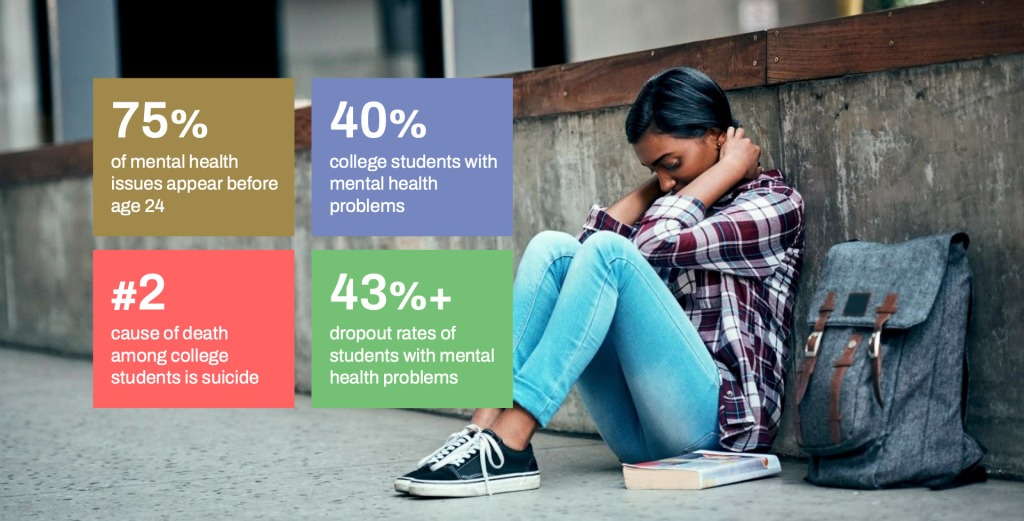
She told me about her challenges in triaging students in a 10-minute appointment: deciding who will likely get better by themselves, who can be treated within primary care, who to refer to a mental health specialist, or who needs a safety plan because they face immediate risk of harming themselves. 78% of students on her campus self-identified as having some mental health issues. The average waitlist for therapy was 3 months. Every year there were student suicides at her university.

Back at my desk I researched statistics and literature on student mental health, which concurred with Dr M’s experience. There is a crisis on both sides of the Atlantic. Ever greater numbers of students in the UK and US are presenting with mental health problems. Higher education institutions are struggling to keep up with the demand for support. These challenges are exacerbated by a backdrop of multiple societal crises, including the climate emergency, racial injustice, systemic inequity, and now a global pandemic. This means there is great need for change and even greater potential for innovation. 

After Kit Yee Au-Yeung joined my team as a product manager, we partnered with Shift, a London-based social innovation charity with experience of user-led design and deep knowledge of the youth mental health space. We commissioned Shift to conduct more formal user research into student mental health to learn more about the experiences of students and clinicians working in higher education settings. In a series of studies between 2018 and 2020, Shift tested how Amber’s proposition of introducing a new, more objective measure of depression and anxiety would resonate with clinicians and students with lived experience of mental health problems: how they might use it in their daily lives and professional practice, and what the challenges might be in introducing such a radical new approach.

We found student mental health to be a fertile ground for tech-enabled innovation for several reasons. There is growing unmet need for college mental health services. Students have been pushing for change in mental health and are often early adopters of technology. Universities have both a moral and financial incentive to improve their student mental health systems.

Shift’s report highlights the current challenges in college mental health, the role that better mental health data can play in empowering both students and clinicians, and the importance of putting people at the heart of tech innovation. We emerged with three clear recommendations for those working to improve student mental health:

  1. Support students to track their own subjective data
  2. Introduce objective data into therapeutic interactions
  3. Make data accessible and interpretable for students and clinicians

By sharing our insights as well as open-sourcing our technology, we hope to inform and enhance the work of other researchers and innovators striving to improve mental health services and outcomes for students. We also hope to encourage much-needed investment into further research, tools, and services to improve student mental health, accelerating systemic change towards a world where all students can get the mental health support they need.

Learn more about our user research and download the report on the Shift website.

Sharing Project Amber with the mental health community

New open source resources to help researchers collect and interpret electroencephalography (EEG) data for mental health measurement

Today at the Sapien Labs Symposium, my colleague Vlad Miskovic presented insights from Project Amber, an early stage mental health project at X. Amber’s small team of of neuroscientists, hardware and software engineers, machine learning researchers and med-tech product experts have been developing prototype technologies to help tackle the huge and growing problem of mental health. After three years of exploration, we recently wrapped up our work at X. Now we are making our technology and research findings freely available in the hope that the mental health community can build upon our work.

Poor mental health is a huge and growing problem globally. The World Health Organization estimated in 2017 that 322M people globally suffer from depression and 264M from anxiety. The COVID-19 pandemic is causing widespread psychological distress, affecting even more people.

One of the challenges is that it is truly difficult to assess mental health, both for people who are distressed and for health care providers who are not experts in mental health. With 1000 possible symptom combinations, depression manifests differently in different people. Today’s assessment of mental health mostly relies on asking people a series of questions in a conversation with a clinician or via surveys such as the PHQ-9 or GAD-7, which are subjective. While it is important to capture the subjective experience of a person living with mental health problems, the field is missing objective measures that are commonplace in other areas of health. For example, people with diabetes and their doctors routinely measure blood glucose and use these data to make adjustments to insulin, diet and exercise regimes — but there is no equivalent for depression or anxiety.

Amber’s moonshot: Finding a biomarker for depression

Our journey started by asking the question: what if we could make brain waves as easy to measure and interpret as blood glucose, and use them as an objective measurement of depression? Our approach was to marry cutting-edge machine learning techniques with a 96-year-old technology to measure electrical activity in the brain: electroencephalography (EEG)

We were inspired by neuroscience studies showing that certain patterns of electrical activity in the brain correspond with depression symptoms. For example, many depressed people find that things that once brought them pleasure no longer do so; they don’t experience the reward that follows a positive experience. By designing specific game-like tasks that people complete while their brain activity is being measured using EEG, scientists can gauge processing within the brain’s reward system. It turns out that the brain response following a win in the game — an event related potential (ERP) — is subdued in people who are depressed, compared to those who are not.

Image for post
Difference in reward response among depressed and non-depressed people
(unpublished data from Amber feasibility study with Florida State University)

This blunted brain response is a reliable effect that has been shown in many studies, which we replicated in our own study carried out in partnership with Greg Hajcak and his team at Florida State University.

However, these studies were done in neuroscience research labs. They require expensive specialist equipment and highly trained EEG experts to collect, process and interpret the data. For EEG to come out of the lab and into the real world as a mental health assessment tool in a primary care doctor’s office, counseling centre or psychiatric clinic, it needs to become more accessible and usable at scale.

Our project at X focused on three areas:
1) Making EEG data easier to collect
2) Making EEG data easier to interpret
3) Understanding how this technology might be applied in the real world

The rest of this post lays out our work and insights in each of these areas.

Making EEG data easier to collect: The Amber EEG system

Our team set out to develop an easy-to-use, low-cost, portable, research-grade EEG system.

Image for post
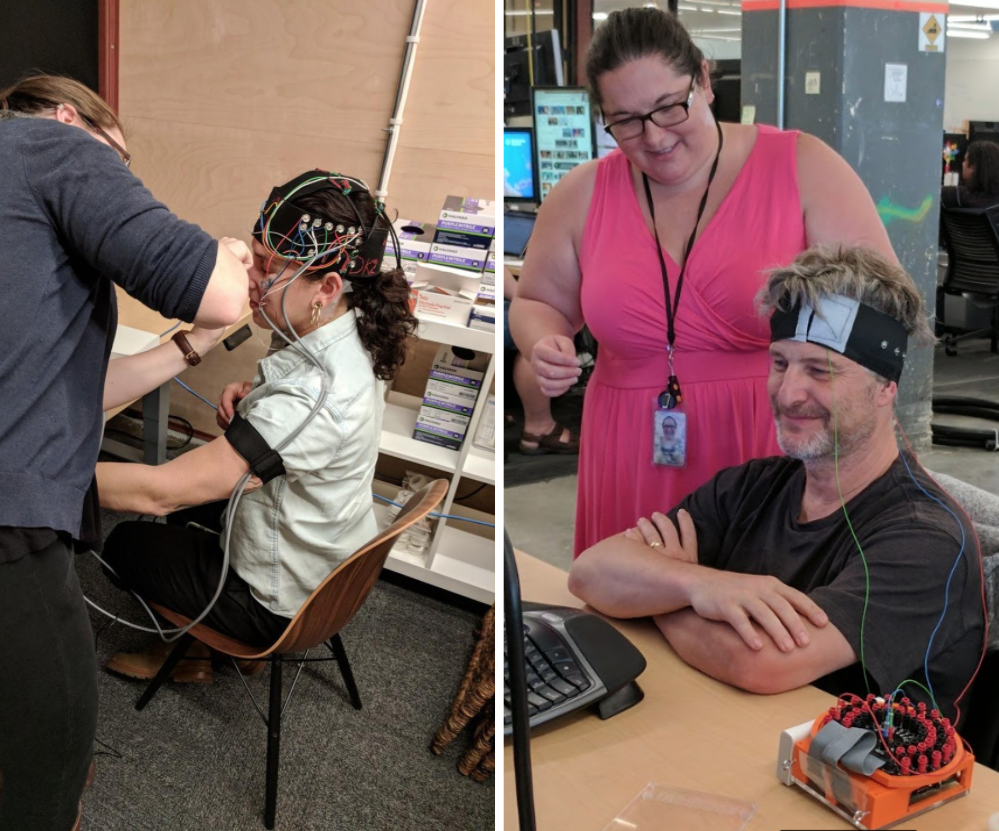
Hardware engineer Gabriella Levine (left), neuroscientist Sarah Laszlo (right) testing early Amber prototypes

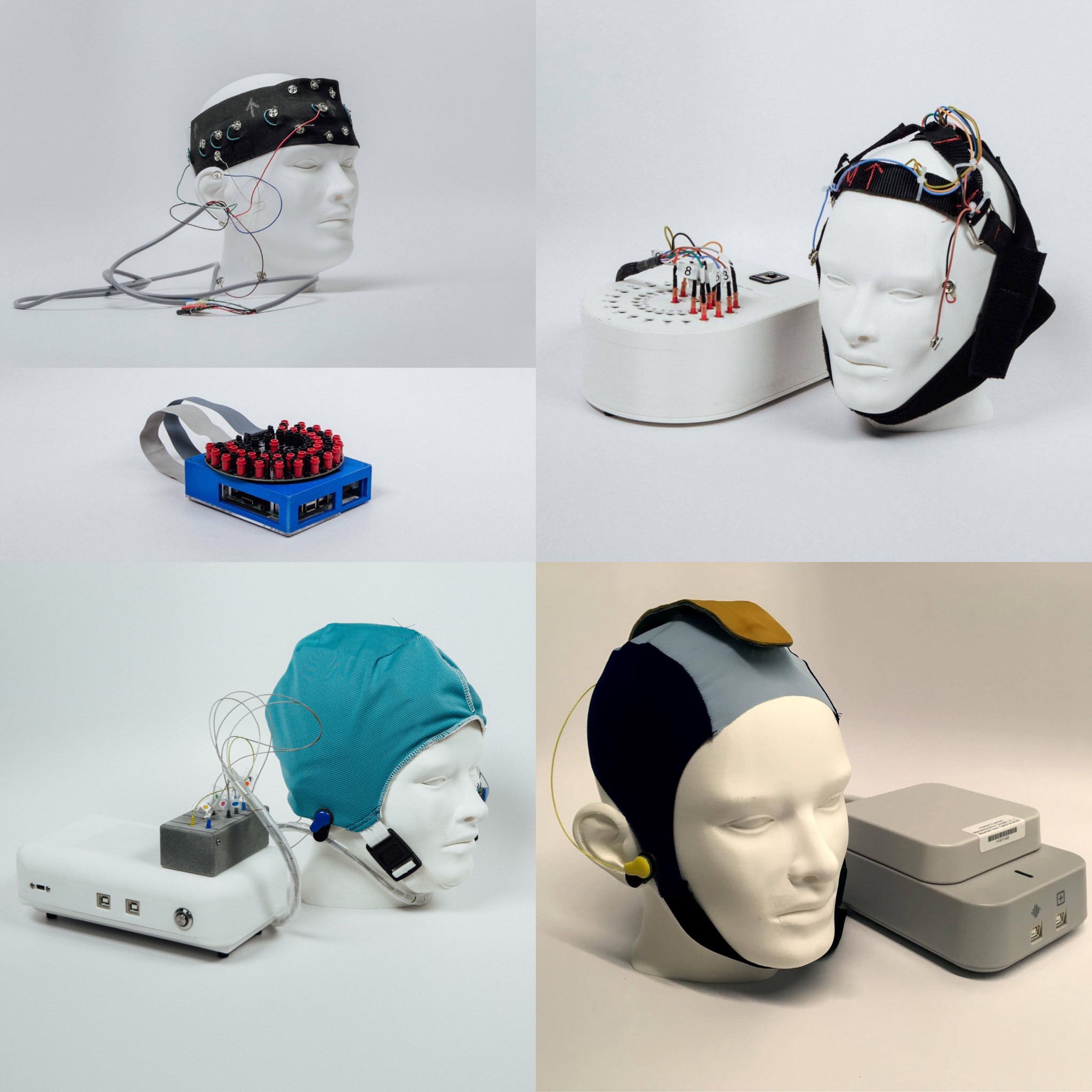
We built many prototypes of bioamplifiers, headsets and sensors, and tested them in feasibility studies at X and at Florida State University. 

Image for post
A selection of the Amber EEG prototypes

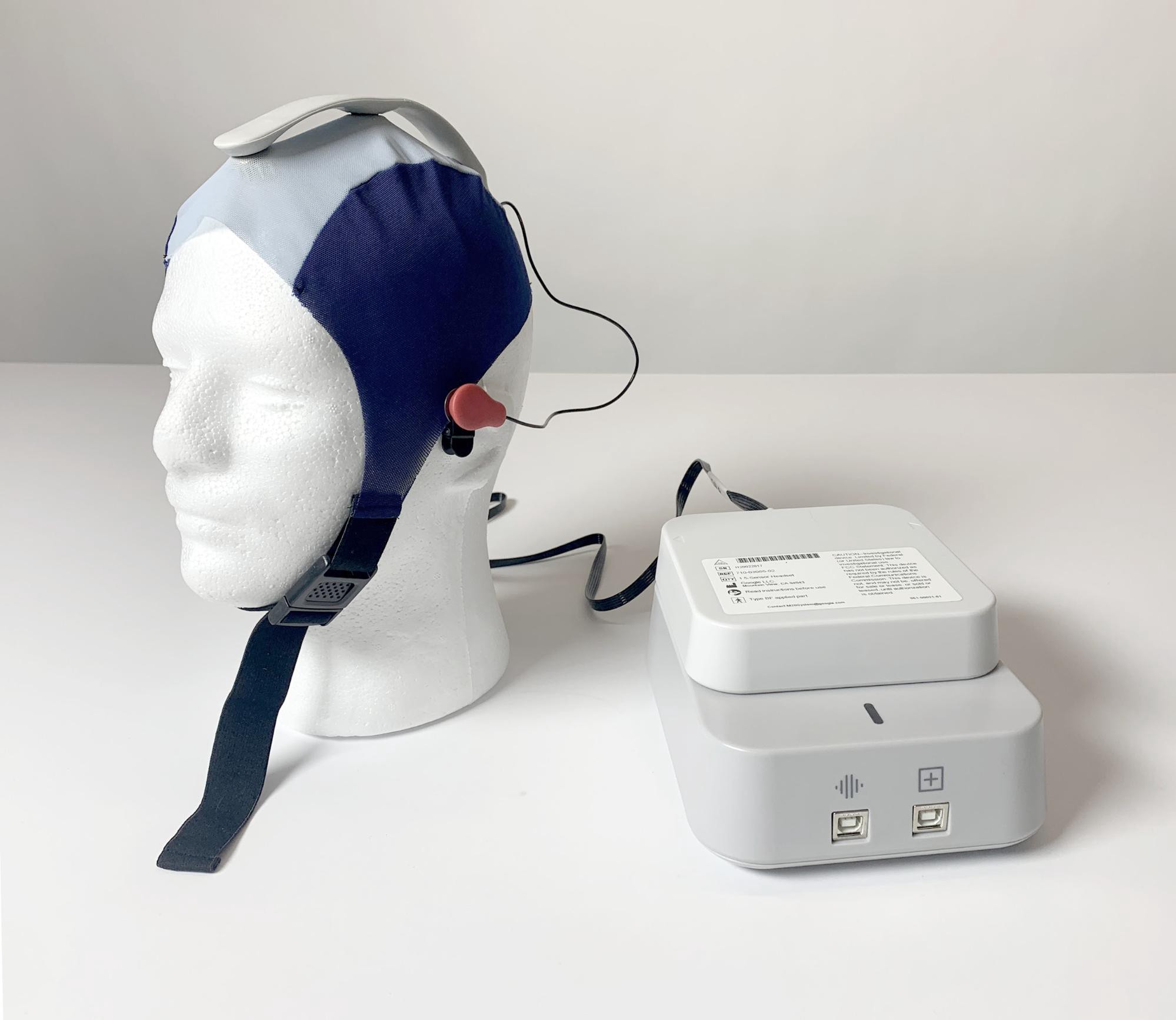
In our final prototype the headset slips on like a swim cap and can be put on by anyone with minimal training, taking around three minutes to set up. It uses three dry sensors arranged along the midline at Fz, Cz, Pz, the most important channels for ERP assessments of reward and cognitive function. The accompanying bioamp can support up to 32 channels, so it’s possible to connect a standard headset with some modifications. Amber’s system can be used to collect resting state EEG and event-related potentials with our software that time-locks a task to the EEG measurement.

Image for post
Amber’s final EEG prototype: Headset, sensor strip and bioamp

Making EEG data easier to interpretApplying machine learning techniques to EEG signal

Our team also explored how new approaches in machine learning can be applied to interpreting EEG data. To make EEG data usable by mental health researchers and clinicians more broadly — i.e. outside electrophysiology labs and neurology clinics — it would be helpful to have automated ways to denoise the signals at scale, and to determine which aspects of the EEG signal are relevant. Collaborating with the team at DeepMind, we adapted methods from unsupervised representation learning to address these challenges. We set out our findings in a paper that is currently under review.

First, we demonstrated that representation learning approaches such as autoencoders could be leveraged to effectively denoise EEG signals without a human EEG expert in the loop. This is important to enable processing EEG data at scale. Second, we offer a proof of concept that it’s possible to extract interpretable features that are relevant to mental health. We used these features obtained from disentangling autoencoders to predict several clinical labels such as major depressive disorder and generalized anxiety disorder, based on a clinical interview by a mental health expert. Unlike previous studies, we were able to do this for an individual participant (rather than a group), which is essential to make it useful in a clinical setting. The methods were capable of recovering usable signal representations from single EEG trials. This means that it may be possible to derive clinically useful information from brain electrophysiology with far fewer data samples than what is traditionally used in research labs, which often rely on hundreds of experimental trials.

Understanding how this technology might be applied in the real world: Insights from user research

Over the course of our project, we conducted over 250 interviews with potential users of this technology. We spoke to people with lived experience of mental health problems and with clinicians of all kinds, including counsellors, therapists, psychiatrists, clinical psychologists, social workers, primary care practitioners and pediatricians. We tested how Amber’s proposition of introducing a new, more objective measure of depression and anxiety resonated with them, how they might use it in their daily lives and professional practice, and what the challenges might be in introducing such a radical new approach.

Here are three key insights from our user research:

  1. Mental health measurement remains an unsolved problem. Despite the availability of many mental health surveys and scales, they are not widely used, especially in primary care and counseling settings. Reasons range from burden (“I don’t have time for this”) to skepticism (“Using a scale is no better than using my clinical judgement”) to lack of trust (“I don’t think my client is filling this in truthfully” and ”I don’t want to reveal this much to my counsellor”). These findings were in line with the literature on measurement-based mental health care. Any new measurement tool would have to overcome these barriers by creating clear value for both the person with lived experience and the clinician.
  2. There is value in combining subjective and objective data. People with lived experience and clinicians both welcomed the introduction of objective metrics, but not as a replacement for subjective assessment and asking people about their experience and feelings. The combination of subjective and objective metrics was seen as especially powerful. Objective metrics might validate the subjective experience; or if the two diverge, that in itself is an interesting insight which provides the starting point for a conversation.
  3. There are multiple use cases for new measurement technology. Our initial hypothesis was that clinicians might use a “brainwave test” as a diagnostic aid. However, this concept got a lukewarm reception. Mental health experts such as psychiatrists and clinical psychologists felt confident in their ability to diagnose via clinical interview. Primary care physicians thought an EEG test could be useful, but only if it was conducted by a medical assistant before their consultation with the patient, similar to a blood pressure test. Counsellors and social workers don’t do diagnosis in their practice, so it was irrelevant to them. Some people with lived experience did not like the idea of being labelled as depressed by a machine. By contrast, there was a notably strong interest in using technology as a tool for ongoing monitoring — capturing changes in mental health state over time — to learn what happens between visits. Many clinicians asked if they could send the EEG system home so their patients and clients could repeat the test on their own. They were also very interested in EEG’s potential predictive qualities, e.g. predicting who is likely to get more depressed in future. More research is needed to determine how a tool such as EEG would be best deployed in clinical and counseling settings, including how it could be combined with other measurement technologies such as digital phenotyping.

Much of our research was conducted in the US and the UK in partnership with Shift, a nonprofit based in London. This report by Shift details the research and the findings. (Report added on 15 December 2020.)

Opening up Amber to the world

We didn’t succeed in our original goal of finding a single biomarker for depression and anxiety. It is unlikely that one exists, given the complexity of mental health. Yet there’s no question that there is a huge opportunity for technology to enable better measurement.

This will empower individuals and their healthcare provider to better match intervention options to an individual’s needs, to measure the impact of those interventions, and ultimately promote better mental health. While the promise of emerging measurement techniques like EEG/ERP and digital phenotyping is very exciting, it is still early days. There are many pitfalls on the path to making tech-enabled mental health measurement work in the real world, and more research needs to be done.

For this reason we’ve decided to make Amber’s technology and insights available to the global mental health community. We believe we can make a bigger and faster impact on this huge problem by sharing our work freely.

Today, we are open-sourcing our hardware designs, visualizer and stimulus software of the Amber prototype EEG system and putting the code on Github. We are also pledging the free use of our patents and applications listed in this patent pledge. We are making these resources available so that mental health researchers have all of the specifications, code, and permissions they would need to rebuild our EEG system, or design their own based on it. In addition we are donating 50 assembled Amber prototype devices to Sapien Labs for use by researchers worldwide as part of their Human Brain Diversity Project which supports EEG research globally, with an emphasis on low-income countries and underrepresented groups.

We hope that open-sourcing our EEG system and publishing our machine learning techniques will be of value not just to EEG experts, but also to the wider mental health research community who were perhaps put off by the complexity and cost of working with EEG before. Addressing today’s challenges will require new partnerships between scientists, clinicians, technologists, policymakers, and individuals with lived experience. Now more than ever, more diverse voices, more multi-disciplinary collaboration, and more open sharing of knowledge are needed to unlock better mental health for everyone.

To learn more about Amber’s technology and user research, please visit the following links:

Please note: The Amber EEG System is a prototype investigational device and has not been evaluated by the US Food and Drug Administration or any other regulatory agency for any purpose, including a medical purpose.

This blog was first published on 2 November 2002 and updated on 15 December 2020 with links to the Shift user research report.

Asking for help and saying “Yes”​ in the age of the COVID-19 pandemic

This post first was first published on LinkedIn on 14 July 2020.

What I learnt working on Heroes Health, a new initiative to support the mental health of COVID-19 frontline health care workers and first responders

Back in March, I got a call from Dr. Sam McLean, a trauma researcher and emergency physician at the University of North Carolina. At the time, I was struggling to settle into the new reality of my life in the pandemic. Working from home in a never-ending stream of video calls, I was missing my team and spontaneous chats with co-workers in the kitchen. I felt isolated from my friends and family, not having the energy for yet another video call after work. My husband and I were figuring out new parenting skills: how to homeschool our children, how to deal with ever-expanding screen time when they asked for Minecraft and Netflix after doing their online school work. Yet our family’s struggles felt tiny compared to what others were facing. As I read the devastating news of COVID-19 infections, deaths and job losses mounting up in Europe and elsewhere, I felt helpless and uncertain of where to make a difference in this new world beyond taking care of my family and my team. Sam gave me that opportunity on that grey March morning. 

Sam told me about his work on the COVID-19 frontlines in the hospital. As a trauma researcher, he saw the havoc that the virus was wreaking not just on the lives of his patients but also on his coworkers. Already on the edge of burnout, healthcare workers were confronted with a novel virus without treatment or vaccine, lack of PPE and ventilators, watching their patients suffer and die through glass screens, worrying about infecting their own families. After our call, I read up on the literature. Sam’s personal experience was backed up by many papers discussing the toll on healthcare workers during previous infectious disease outbreaks (Brooks et al., J Occup Environ Med 2018). New papers were already coming out describing increased depression and anxiety among healthcare workers who dealt with COVID-19 in China (Lai J, Ma S, Wang Y, et al. JAMA Netw Open 2020). So what could be done about it?

Sam’s idea was to measure the mental health of COVID-19 frontline workers with a mobile app, and connect them with mental health resources. He wanted to help workers understand and track their own mental health state during this time of extreme pressure, and encourage them to get help – many healthcare workers don’t seek mental health treatment. He called it the “Heroes Health” initiative to draw attention to the health needs of the heroes who are doing so much for others every day. He needed a technology partner and reached out to me for help.

I said “Yes” immediately, and asked others in our company for help. The first to say “Yes” was Jamie Rogers, a product manager on the Google Cloud team. By the end of the day, Sam had engineers from my team at X and Google Cloud working on his app. Two weeks later we had volunteers from across the company donating their time, many working evenings and weekends. The project had become a cross-functional effort of Alphabet engineers, scientists, product and program managers, partnerships, marketing, PR and sales folks supporting Sam’s team of researchers and clinicians at UNC. The Google Cloud team provided free hosting to UNC as part of the Google Cloud Research Credit program. Our design agency O/M Studio made the Heroes Health logo for free. The team at Boston Technology Corp in India worked alongside the Google engineers, turning around bug fixes while our US-based volunteers slept.

While the tech team worked on the app, Sam enlisted the help of other mental health experts such as Ron Kessler at Harvard and Samantha Meltzer-Brody at UNC to design the mental health surveys and support services we wanted to link from the app. We interviewed frontline workers and hospital administrators to understand how to make Heroes Health useful to them, aware that they were already busy and overstretched. Nearly every hospital we spoke to said “Yes” and wanted to take part in the initiative, but they needed our help. We realised that Sam’s team at UNC needed to provide central analytics and program management to support institutions and connect Heroes Health participants to mental health services. We also learnt that with hospital budgets under pressure due to COVID-19, there was no way we could ask participating organisations to fund the initiative.

Sam and I reached out to philanthropists to ask for their help to get Heroes Health off the ground.Garen and Brandon Staglin at OneMind and Zia Khan at The Rockefeller Foundation were the first funders to say “Yes”. Bank of America, The Lauder Foundation and individual donors followed. Those who could not give money generously introduced us to their friends. Within 6 weeks, we had raised $500k we needed as seed funding. We are continuing conversations with funders to cover the project’s expanding needs.

In the middle of all this, Sam stopped responding to my emails. I was worried but kept working on the app and fundraising, hoping he was ok and would reappear eventually. After a long week of silence, I got an email confirming what I had feared: he had contracted the virus and given it to his wife, his son and possibly his dog. I was relieved to hear they were all fine and recovering well. Now a COVID-19 survivor himself, Sam re-emerged with even more energy to make the Heroes Health initiative a success. With the philanthropy funding, he built a diverse team of program managers, data scientists and tech people at UNC to support the project.

Image: UNC Heroes Health team https://heroeshealth.unc.edu/

Image: UNC Heroes Health team https://heroeshealth.unc.edu/

Meanwhile, the world started taking note of COVID-19’s impact on mental health. The pandemic turned a simmering mental health crisis into an acute one, as the UN noted in a policy report on COVID-19 and Mental Health. Millions of people are affected physically by the virus, and many more are affected psychologically. 36% of Americans reported anxiety or depression symptoms in July in a NCHS/Census survey. Calls to mental health helplines are up 891%. I have been compiling papers and articles on COVID-19 and mental health in a shared Google Doc which is getting longer and longer. The papers and articles about and by healthcare workers paint a picture of an increasingly desperate situation: “I can’t turn my brain off“, “I’m a Health Care Worker. You Need to Know How Close We Are to Breaking“, “We think of our physicians as invulnerable, but we’re putting them in untenable situations“, “Behind the stiff upper lip, we’re highly vulnerable“, “Health care workers aren’t just ‘heroes’. We’re also scared and exposed“, “I Couldn’t Do Anything.”

Sam saw this future coming early in the pandemic, and he motivated us all to something about it. The Heroes Health Initiative is now being piloted at Sam’s home hospital, UNC Health in Chapel Hill, just four months after our first call.

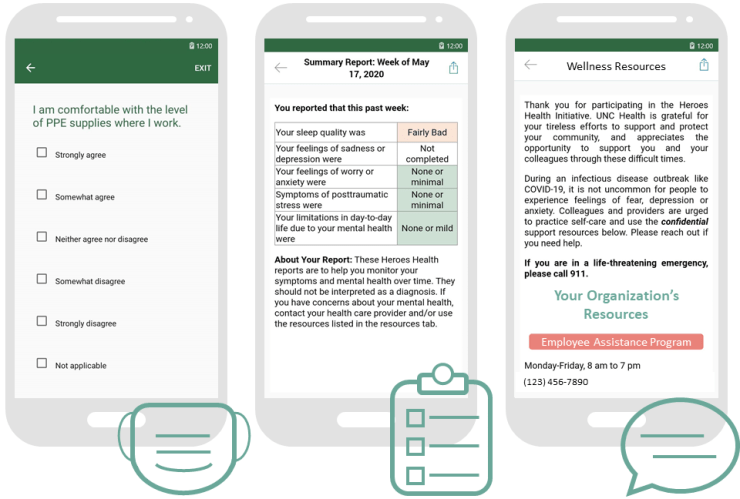
Today we are announcing the rollout of the Heroes Health initiative across the US. Healthcare workers and first responders can now download the Heroes Health app from the Google Play Store and Apple Store free of charge, regardless of whether their institution is taking part in the initiative. For individuals, the app displays symptom summary reports to help them better understand the state of their own mental health and changes over time. The app also provides links to immediate support and mental health resources, emphasising free and low-cost services. 

I am grateful to Sam McLean and his team for giving me the opportunity to contribute to such an amazing project, to our funders, and to the Google and X volunteers who said “Yes” and brought this project to life: Anne-Carlijn Reijrink, Chris Tirrell, Cynthia Horiguchi, Jamie Rogers, Jesus Trujillo Gomez, Katie Link, Kar Epker, Kit Yee Au-Yeung, Nicole DeSantis, Ola Spyra, Pramod Gupta, Qiumin Xu, Stephanie Wilson, Vlad Miskovic, William Mills, Yvonne Yip, Yu-Chi Kuo, Zohreh Jabbari and so many others. We have handed over the app to the UNC team who will manage it going forward. Our immediate work is done, but we are all excited to stay in touch with the project and can’t wait to see its impact.

As for me, Sam and I are already thinking about how we can roll out Heroes Health internationally.

We need your help!

  1. Help spread the word about the Heroes Health InitiativePost about it on your social media. If you know any first responders and healthcare workers in the US, encourage them to join. If you know administrators or executives at first responder and healthcare organisations, tell them about it.
  2. Help us fundraise: We need further funds to bring Heroes Health to more organisations in the US and beyond. You can donate on the Heroes Health fundraising page. If you know a foundation who might be interested to fund the Heroes Health Initiative, please message me on LinkedIn – we would love an introduction.

Visit UNC’s website to learn more.

#heroeshealth #mentalhealth #SupportHealthcareHeroes #ThanksHealthHero #Breakthestigma

Living in modern times

Why we worry about new technology and what we can do about it

Every generation is living in “modern times.” Adam Kirsch, a poet and literary critic, noted that all generations like to think of themselves as living in an age of unprecedented disruption. Like countless generations before us, we are worried about the impact of technology on society. In fact people have always approached new technologies with a mix of pride and trepidation, from the printing press and automated looms, to electricity and the telephone.

What has changed during our lifetime is the pace of innovation. Technological development now outpaces our ability to adapt to it, which has caused a flare in our anxiety about technology and its impact. While the temptation may be to try and slow down technological progress, the best antidote to this anxiety is to remember that society has the power to shape new technologies.

What has changed during our lifetime is the pace of innovation. Technological development now outpaces our ability to adapt to it, which has caused a flare in our anxiety about technology and its impact.

As “Head of Getting Moonshots Ready for the Real World” at X, Alphabet’s innovation lab, my job is to take new technologies out of the lab and into the world. My team and I take science fiction sounding ideas and apply breakthrough technologies to them in the hope of creating new products or services that will solve huge problems. X’s moonshot projects include self-driving cars, which has now graduated from X into a company called Waymointernet beaming balloons, and delivery drones.

Our technology development is shaped and moulded as it makes contact with the real world. Forces as diverse as physics, biology, culture and economics have radically changed the direction of our projects. During self-driving car tests back in 2013, we found that testers stopped paying attention once the car was in self-driving mode. They used their mobile phones, turned their back on the road, and daydreamed. When we realised that humans were not a reliable backup, we pivoted from building semi-autonomous to fully autonomous vehicles. This meant a longer time to market, but ultimately led to a safer and more useful product.

To give ourselves the best possible chance to mould innovation into its most desirable form, the world needs to invest its energies in the following initiatives:

First, we need to make sure nobody is left behind. Access to technology and its benefits should be more evenly distributed. Project Loon is trying to bridge the digital divide using a network of stratospheric balloons to bring internet access to rural, remote and underserved areas. We hope this will enable billions of people to use new sources of information, educational resources, and the latest breakthrough ideas to improve their lives in ways that we cannot yet imagine.

Second, we need to be prepared for a future that is always changing. The accelerating pace of innovation means that jobs change much more rapidly than in the past. According to the World Economic Forum, 65% of the jobs that today’s school children are going to do haven’t even been invented yet.

Research conducted by social scientist Prof. Jutta Allmendinger found that more educated people are less afraid of new technology and are more confident that they can forge a career in a changing job landscape. She argues that life-long learning needs to become the norm, rather than a one-time dose of education early in life. Building on this, I believe we need an education system that fosters independent thinking and builds creativity and resilience rather than just training for specific roles.

The teams at X are multi-disciplinary with varied backgrounds. Photo: X

Finally, technology needs to reflect the people who use it, and that means harnessing diverse perspectives when creating it. The myth of the genius inventor is just that: a myth. The best ideas come from great teams, not great men. At X, our teams are highly multi-disciplinary, with varied backgrounds. Engineers and scientists rub shoulders with product managers, designers and marketers. One of the engineers in my team is a maker and artist, and was a concert pianist and forest firefighter in her previous life. The best ideas come from everywhere in the world, not just from San Francisco or Berlin. From Kenya to Myanmar, local technologists are solving local problems.

While the relentless pace of technological change may bring about uncertainty, we have the power to make technology a force for good by harnessing the diverse perspectives, creativity and talents of people from all around the world.

While the relentless pace of technological change may bring about uncertainty, we have the power to make technology a force for good by harnessing the diverse perspectives, creativity and talents of people from all around the world. With so many unsolved problems, the challenge that lies before us and our children and grandchildren is enormous. Technology will not solve these problems by itself, and no doubt it creates some new ones. It is up to all of us to determine how we use technology responsibly to make a better future for ourselves, and for generations to come.

#Tech #Moonshots #Inclusion #Future

This post was an oped in the German business magazine Wirtschaftswoche in December 2017.