The AI revolution is underhyped, not overhyped

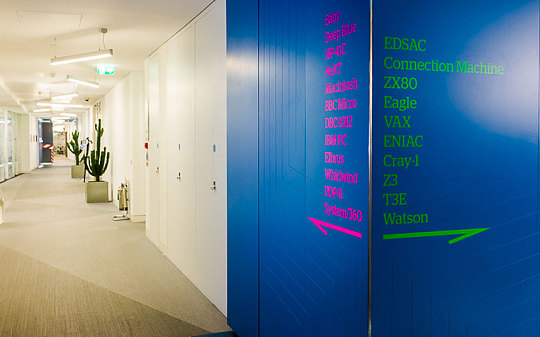
In the early days of Google, when Eric Schmidt was CEO, he frequently came to the London office where our meeting rooms were named after revolutionary computers. Eric invited everyone to an all hands meeting, and just answered our questions for an hour on any topic. He talked about Google’s strategy, the future of computing (back then, Android and Cloud were the new kids on the block) and tech in general. His mantras were ‘focus on the user’ and ‘revenue solves all problems’: if you solve real problems for real people (back then, our end users, advertisers, third party website owners), the money will follow.

This TED interview reminded me of those sessions. Like Eric I lived through the 90s when the internet took off, and was at Google in the 2000s when mobile took off. Gen AI will have a bigger impact on consumers than both of those combined, and I agree with Eric that we haven’t even see a fraction of its impact on each and every one of us. The difference between LLMs and ML is that they touch consumers whereas ML was largely B2B. When consumers drive change, things happen much faster.

Search gave us information at our fingertips, accessible anywhere on our phones. I love the analogy in his talk that LLMs will give everyone DaVinci powers. What if ChatGPT, Gemini and Claude turn us all into creative multi-dimensional thinkers? As an industry it’s our responsibility to make sure AI benefits people broadly, and that we implement it responsibly.

Do you agree or disagree? Comment on my LinkedIn post here.

#technology

#innovation

#ai

#genai

#LLMs

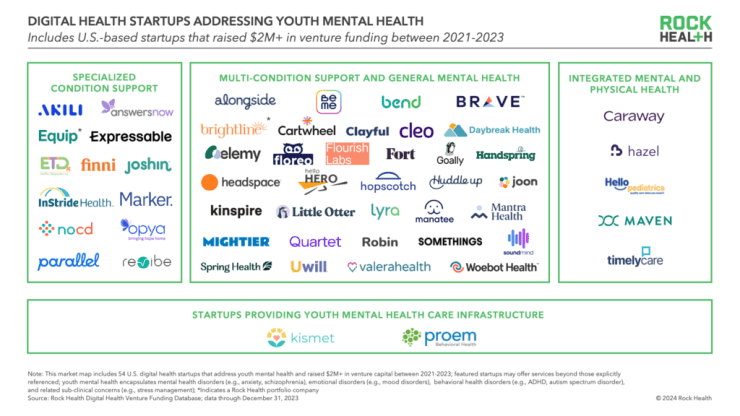
Rock Health’s Youth Mental Health Investment Report

The awesome team at Rock Health just launched a digital youth mental health initiative, in collaboration with Pivotal Ventures, Penner Family Foundation, Hopelab, and the Arthur M. Blank Family Foundation.
Their report on the digital youth mental health investment landscape is worth a read, and I was proud to see Peers.net by Flourish Labs featured in it 🙂
https://rockhealth.com/insights/investing-in-the-future-supporting-digital-innovations-in-youth-mental-health/

#mentalhealth

Introducing the Peers.net Giveback Initiative: making professional peer support accessible to all teens and young adults

Starting today, for every peer support session purchased on Peers.net, we are donating one to our community partners.

Fewer than a quarter of people who experience mental illness in America receive any outpatient mental health care. Of the young adults who got care, more than half pay for it out of pocket (SAMHSA National Survey). One of the biggest barriers to accessing care is cost, and many therapists don’t accept insurance.

We pay our professional peer supporters fairly for their work and provide free training, support and supervision for them. This means that our Peers.net service costs $65 for a 50 minute session. While that’s less than therapy, we know many people still need assistance to cover the cost.

We are committed to making Peers.net accessible to all youth.

To fulfil this commitment, we are partnering with nonprofits and youth-led organizations to donate free Peers.net sessions for their teen and young adult members until we have insurance coverage for our peer support.

The founding partners of our Peers.net Giveback Initiative are:

Active Minds is the nation’s premier nonprofit organization supporting mental health awareness and education for young adults. 

Dragonfly Mental Health is focused on cultivating excellent mental health in academics worldwide by developing, deploying, and evaluating evidence-based strategies. 

I Have The Right To works on creating an ecosystem of respect and support for students and survivors of sexual assault. Founded by a survivor and their parents, they are a hub for middle and high school students, parents, and educators looking for information, support, and avenues of action against sexual assault.

The Mental Health Initiative For South Asians (MHISA) is a grass-roots organization founded by students at UT Austin committed to addressing the societal and structural barriers which prevent South Asian-Americans from accessing mental health care.

Morgan’s Message strives to eliminate the stigma surrounding mental health within the student-athlete community and equalize the treatment of physical and mental health in athletics.

NAMI Clackamas is an Oregon-based chapter of the National Alliance on Mental Illness, dedicated to improving the quality of life for everyone impacted by mental health issues through support, education, and advocacy. We hope to work with more NAMI chapters in future.

OutCare Health is a non-profit leading the charge for LGBTQ+ health equity worldwide, empowering millions of LGBTQ+ individuals with comprehensive resources, support, and education.

Running Start is a nonpartisan nonprofit that trains young women to run for political office. When they surveyed their members how they could support them further, mental health was the #1 request.


We’ll be adding more partners over the next few months. If you are a non-profit or youth-led organization that would like to receive donated sessions for your members, please get in touch. It doesn’t matter whether your mission is directly related to mental health or not – all that matters is that you want to support the mental health of your teen and young adult members, and have a way to distribute our peer support sessions to them.

The role of philanthropy in funding mental health innovation

We believe that peer support should be part of the healthcare system, provided by professional peer supporters who are paid for their work, and funded equitably by insurance alongside other forms of mental health care.

Today, there are only 25,000 people who work as a peer support specialists in the US. Insurance reimbursement for peer support exists, but is not yet wide-spread. As a result, much of peer support is provided by volunteers and funded by philanthropy. This will not scale to reach the millions of people who could benefit from peer support.

We are actively working on partnerships with Medicaid and private insurance companies, so that our Peers.net service will be covered by insurance. But insurance contracts take a while to set up, especially for Medicaid which is administered differently in each state. 

Philanthropy can play an instrumental role to provide bridge funding to demonstrate that peer support works: for young people who want faster access to quality care, for provider groups who are thinking about integrating peer support into their care model, and for health insurance plans who are looking to reduce the overall cost of health care.

On the research side, Professors Keanan Joyner at UC Berkeley and Greg Hajcak at Santa Clara University are conducting a study to assess whether Peers.net telehealth peer support can reduce anxiety and depression in young adults. The study is independent of Flourish Labs, and funded by The Cohen Foundation, the Penner Family Foundation, and an individual donor.

Donors can also help us provide more peer support sessions to our partner organizations. Your donation will go directly to the organization to support their mental health work, and we will provide them with discounted sessions in addition to the free ones we’re donating. 

This is why I am announcing this initiative at the Milken Health Institute Future of Health Summit today, the most important gathering of philanthropists in the health space.

How you can help: Give the gift of peer support today

We’re going to keep giving away sessions until we have reached our goal of getting wide-spread insurance coverage for our peer support. We’re an early stage startup and have limited funds, so we need your help!

If you have a teen or young adult in your life who could benefit from support, consider buying a gift card for them. Remember, we’ll donate one session for every session you buy.

If you are a donor and would like to fund a bundle of 100 or more sessions to one of our partners or another organization you already support, and would like us to include in our Giveback Initiative, please get in touch.

Together with our community partners and your help, we can bring professional mental health peer support to millions of youth across the country who otherwise would not be able to access it.

#givebackmentalhealth#mentalhealth#Peersupport

This post was orginally posted on the Flourish Labs blog.

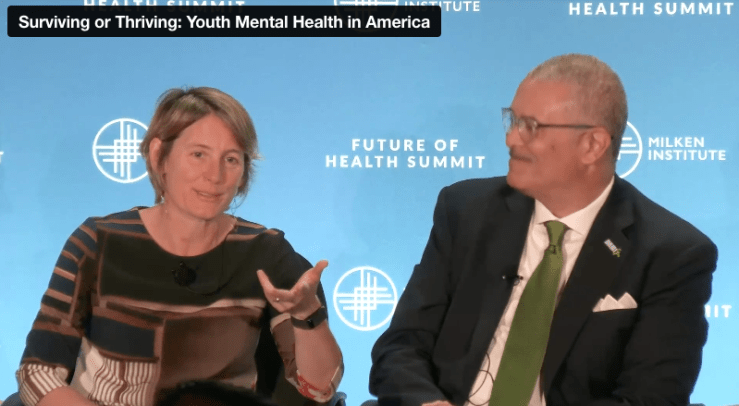
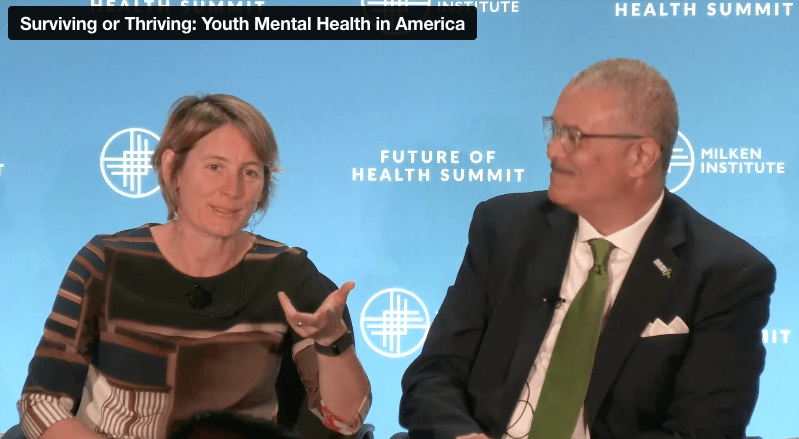
Milken Institute Future of Health Summit: Surviving or Thriving: Youth Mental Health in America

Milken Institute Future of Health Summit: Surviving or Thriving: Youth Mental Health in America
6 November 2023
Washington, DC
Panel
“Surviving or Thriving: Youth Mental Health in America”


Obi spoke on a panel hosted by William Brangham of PBS NewsHour, alongside Daniel Gillison, CEO of NAMI, Amanda Grigg of the National Academies of Sciences, Engineering and Medicine, and Kacie Kelly of the Meadows Mental Health Policy Institute.

Children and youths, affected deeply by the COVID-19 crisis, are reckoning with a different kind of epidemic. Pervasive depression and anxiety, rising rates of substance misuse, increasing isolation and loneliness—all are contributors to the sad status quo. Society must find ways to address the needs of younger generations, both outside and inside the classroom, to ensure a healthy and thriving future. Join specialists and advocates to chart a new path with solutions that will prove durable over time. 

Watch the recording here:

https://milkeninstitute.org/panel/15029/surviving-or-thriving-youth-mental-health-america

From crisis to connection: professional peer support is our answer to the youth mental health crisis

Peers.net brings professional peer support to youth across America, now available for teens and integrated into Scout by Sutter Health

Somewhere not too far from where you’re reading this, there’s a teenager at a hospital emergency department navigating a mental health crisis. Most likely, they’ll be released after sitting in the emergency room for several hours. According to guidelines, they are supposed to be seen by a mental health professional within seven days after being discharged from the emergency department. In reality, less than one in three young people get any follow up, and one in four will return to the emergency department within six months (Hoffman et al, 2023). 

The teen and their parents will leave the hospital and try to figure out next steps. They will likely struggle to find a therapist that has free appointments, is affordable and can relate to the teen. Many just give up.

“Youth mental health is the defining public health crisis of our time.”

— Dr. Vivek Murphy, U.S. Surgeon General

The United States is in the midst of a mental health crisis, with a severe shortage of mental health providers. The US has just over half a million therapists. We would need to more than double the number of providers to ensure everyone can access the care they deserve, and demand is growing faster than new therapists are being trained. The gap between need and care is most pronounced among young adults. 46% of young adults experienced substance abuse or mental illness in 2021, and 55% of those received no care (SAMHSA National Survey 2021). Youth is a critical time for intervention, in 75% of cases the first onset of mental illness is before the age of 24 (Kessler et al, 2005). U.S. Surgeon General Dr. Vivek Murphy has called youth mental health the defining public health crisis of our time.

Shot of a young female student sitting on the floor feeling depressed on campus

Professional peer support is our answer to the youth mental health crisis

My cofounder Dr. Kim Newell Green practiced as a pediatrician at Kaiser Permanente in San Francisco for over a decade and saw first hand how her teen and young adult patients struggled to access timely, age-appropriate mental health care. I first experienced the power of peer support two decades ago when my boyfriend was diagnosed with bipolar disorder. Peer support is backed by evidence and rooted in human connection, but has not yet been scaled. Mental Health America estimates that there are under 25,000 Peer Support Specialists who do peer support as a job.

What was lacking was a way to scale training to bring more people into the peer support workforce, and a robust and secure telehealth offering that fits within the healthcare system and can reach youth anywhere, not just in urban centers. We founded Flourish Labs to do just that.

“We’re on a mission to scale professional peer support with the help of technology to address the mental health crisis.”

We expand the mental health workforce by hiring and training young adults with diverse backgrounds and past experience of mental health challenges to become certified Peer Support Specialists. Our proprietary online training fulfills state and national certification standards and was developed together with experienced peer supporters, online learning experts, and young adults.

On Peers.net, our HIPAA-compliant telehealth platform, youth can book a 1-on-1 session with a professional peer supporter of their choice, on demand. Our professional peer supporters provide emotional support, teach skills, and share their knowledge and personal experiences dealing with depression, anxiety, trauma, stress, body image issues, LGBTQ+ questions, and more. 

Many studies showed that peer support is effective to help people reach recovery and live fulfilling lives. Perhaps more surprisingly, it can also help the supporter stay in recovery (Johnson et al, 2019). By offering training and jobs to people in recovery, we create a virtuous cycle and turn a huge problem into a huge opportunity: 58 million adults have a mental health diagnosis in the US today. If we can help even a fraction of them to reach recovery and train them to work as Peer Support Specialists, we will dramatically expand the mental health workforce.

We’re not alone in our belief that professional peer support can bridge the gap in mental health care. Mental Health America, the Biden Administration, and the US Governors Association among others have all made it a priority.

We were fortunate to be backed by great investors at Gradient Ventures, Collaborative Fund, Learn Capital, WGU, Tiny VC and One Mind, as well as operator angels from healthcare companies who are helping us build our vision.

Built for young adults – and now teens!

We launched an early version of Peers.net in late February 2023 and have been learning from hundreds of young adults who tested our service and gave us feedback in our user research studies.

We learned that they love being able to choose their peer supporter along dimensions that matter to them. Many therapists look like my cofounder Kim and I: middle-aged cisgender straight white women.

Dr. Kim Newell Green (left) and Obi Felten (right), Flourish Labs founders

Gen Z and Millenials are more diverse than any other generation before, and they want to connect with someone closer to them in age who shares their identity and life experiences. Our Peers.net supporters are young adults aged 18 to 35; more than half of them identify as LGBTQ+ and/or BIPOC.

Here is what our beta users have said:

“I highly enjoyed the session. Overall, I felt supported, heard, and appreciated. More importantly, I shared common ground and felt a sense of belonging with my Peer Supporter.”

“My peer supporter was lovely and an absolute joy to interact with. I felt that my issues were heard and that the intersectional factors that impact my well-being was seen. She created a wonderful list [of tools] with me that I look forward to applying moving forward.”

“I am very blown away at how effective it was for me to just talk to someone about my troubles. I have recently stopped therapy due to financial constraints, but after going through today’s session I decided to continue on with the peer supporter I chose in the coming future because I found it so helpful.”

We learned that not all of them want to be on video, so we’re allowing sessions to be off video/audio only, and are working on adding text-based messaging.

We also got one question over and over again:

“When are you opening up to teens?”

We’re excited to launch the official version of Peers.net today, and open up to teenagers for the first time. This means we’re now providing Peers.net support to everyone between the ages of 13 and 30.

Built for healthcare: Announcing our partnership with Sutter Health

As we expand, our goal is to make professional peer support part of the standard of care in mental health. To do this, we chose to work within the healthcare system and to healthcare standards, including our HIPAA-compliant platform. We ensure quality, manage risk and measure outcomes via a combination of experienced supervisors and AI. 

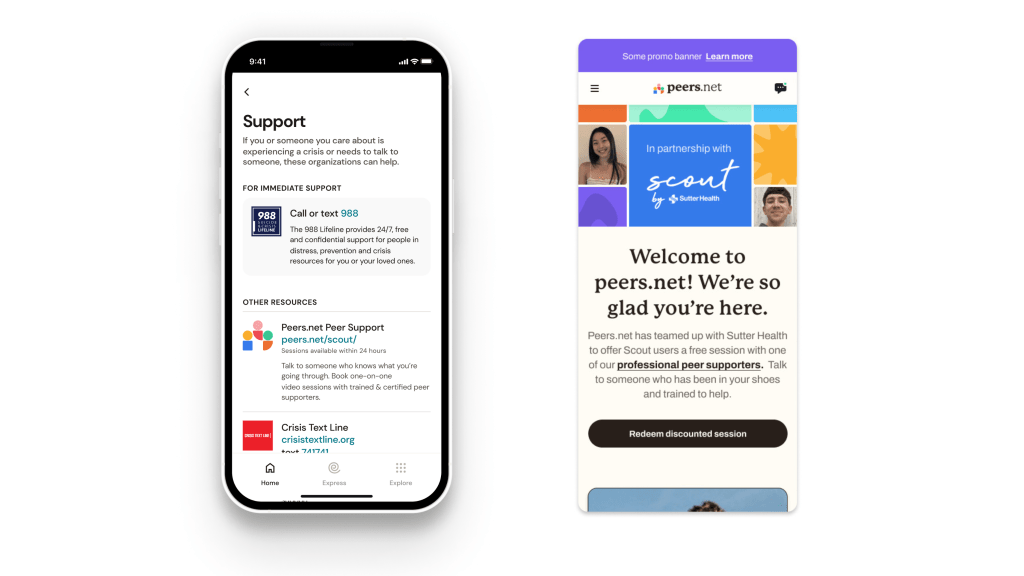
For provider groups, schools and health plans, Peers.net unlocks rapid access to 1-on-1 support across the spectrum of mental health needs. This might be a youth leaving the emergency room or an eating disorder intensive outpatient program, or a first generation student looking for support during stressful exam times. Our first healthcare partner is Sutter Health, who are today announcing the launch of their Scout mental health app for teens and young adults. Scout by Sutter Health™ offers evidence-based tools, exercises and resources for self-care. While designing Scout, the Sutter Health team found that some users were looking for rapid access to 1-on-1 human support in addition to the app, and chose to partner with Flourish Labs to provide this. As of today, Scout users can access Peers.net with one click from the resources page within the app.

To celebrate the launch, we’re offering Scout users a free Peers.net session, for a limited time only. Peers.net users will get a free Scout app membership.

Join the peer support revolution

We hope this will be the first of many partnerships where we work with health systems and provider groups to integrate our peer support into their care model. Our goal is to partner with Medicaid and commercial insurance plans to make peer support routinely reimbursed like other mental health services.

While we work on getting our health plan partnerships in place, we made Peers.net affordable at $65 for a 50 minute session – about half the cost of therapy. If you are a parent, fairy godmother, thoughtful older sibling or just looking out for a friend, you can buy a gift card and save up to 20% on a bundle of sessions.

We’ll also be working with community organizations to make discounted or free sessions available to their teen and young adult members; we will announce this later this year. Please get in touch if your organization would like to be included in this program.

With partners like Sutter Health, Flourish Labs is helping to bring about a future where affordable, quality mental health support is available to everyone who needs it. A future where teens, young adults and their parents no longer have to face these challenges alone.

By addressing the workforce gap and offering a scalable solution to the youth mental health crisis, we are rewriting the story from one of crisis to one of empowerment, where youth who experienced mental health challenges first-hand become part of the mental health workforce, help others, and help themselves stay in recovery.

If you recognize yourself or someone you love in this story – as someone who needs support or could provide support, as a community organization who wants to provide support to your members, as a provider group or health plan who wants to expand access and lower costs – please join us at Peers.net and be part of the revolution.