Peers.net is joining WellSpace Health

Some big changes are happening with our company.

Earlier this year we made the tough decision that our Peers.net peer support service would grow faster and have more impact within a larger organization. Peers.net is moving to WellSpace Health, a nonprofit community health system which provides medical and mental health care to over 130,000 Medicaid and uninsured patients and runs the 988 crisis line in Northern California.

Our head of peer support, Jammie Gardner, and our care coordinator, Rebecca Young, are joining WellSpace, along with our California-based peers. Peers.net service is currently suspended while they are going through onboarding at WellSpace, but will resume soon. WellSpace is also continuing our accredited training program, using our scalable online model to train more young adults as peer support specialists and community health workers.

Kim Newell Green, MD FAAP and I co-founded Flourish Labs just after the pandemic to scale peer support as a solution to the youth mental health crisis. Our founding story was personal as well as data-driven. We saw the shortage of mental health professionals in our home and work lives, and had personally experienced the power of peer support through family members struggling with addiction. Peer support is evidence-based but underutilized: many people don’t know about it as an alternative to therapy, it’s rarely available via telehealth, and insurance coverage is limited.

We built Peers.net to change that, with a team of healthcare, peer support and tech experts. We co-created with young adults and teens to launch a mental health service optimized for Gen Z, giving them a choice of providers by shared lived experience and identity (we’re proud that half of our peers identify as LGBTQ+ and BIPOC). We demonstrated that Medicaid and commercial health plans will reimburse peer support, signing contracts in 5 states covering 10 million lives. We trained over 100 young adults as peer support specialists, and could have trained thousands – we received over 4,000 job applications. We delivered high-quality service to nearly 1000 young people, with 95% saying they were extremely satisfied and 93% saying they had an excellent therapeutic alliance with their peer.  We received incredible testimonials about the profound impact of feeling truly seen and heard. We profoundly changed lives, and in some cases saved the lives of those we reached.

However, we didn’t scale to our impact and revenue goals. Everyone knows there’s massive demand for youth mental health services: 34% of teens and young adults struggle with mental illness, and over half get no care. Despite this, finding clients and enrolling them into our service proved challenging. We’re not alone in this struggle. Many digital health companies we spoke to face similar patient acquisition challenges as search is disrupted by LLMs, ads are becoming ever more expensive, and activating provider referral channels takes enormous effort and time.

Earlier this year we made the tough decision that Peers.net would grow faster and have more impact within a larger organization. WellSpace Health shares our commitment to peer support and already includes peers in their clinic-based care model. Our telehealth and AI technology will help them expand their tech capabilities and geographical reach.

The bittersweet part: Since WellSpace is focused on California, we’ve ended our operations and health plan contracts in Oregon, Nevada, Washington DC and New Jersey. Many of our team won’t be moving to WellSpace, including Kim and myself. Some of our team already have new roles, others are looking for their next opportunities.

💃 You’d be lucky to have Erika Rowen, Hannah Schilpp, Paola Veglio and Kim Newell Green, MD FAAP on your team. Our talented peer supporters Rilynn McClain-Small, Arianna J., Eli Mendoza, Layla Ghazalba, Gertrude Nakibuule, Julia Parker, Alexzander Chross, Jonathan Mortenson, Myra Kelly, Nina Smith are also seeking new roles. Please DM me if you can help them.

🙏 Thank you

We’re deeply grateful that our mission – scaling peer support through telehealth and AI to address the youth mental health crisis – will continue and grow. We built something meaningful that will outlast our company. Thank you to the WellSpace team A. Jonathan Porteus, PhD, Christie Gonzales, Dr. Janine Bera, Cordia Losh and Ben Renteria for taking on the baton to grow peer support for young people.

A big big thank you to everyone who believed in our vision and joined our journey, especially our incredible team, investors, advisors, and partners made this work possible. We learnt from so many incredible people how to build Peers.net, including teens and young adults, peers, mental health industry experts, and other founders.

to our team:

Article content
The awesome Flourish Labs team!

Kim Newell Green, MD FAAP, Adrian Koren, Alex Weisman, Ally Linfoot, Claire Bradley, Erika Rowen, Hannah Schilpp, Jammie Gardner, Julia Tasiopoulos, Paola Veglio and Rebecca Young

to our investors:

Anna Patterson and Andrew Brackin at Gradient

Luisa Sucre, Craig Dalton, Guy Vidra and Craig Shapiro at Collaborative Fund

Carmine Di Maro and Pushkar Joshi, PhD at the One Mind accelerator

Jason Levin at WGU Labs

Jason Lehmbeck , Lisa Hepburn and Matthew Biel at the Georgetown University Thrive accelerator

Carrie Walton Penner , John Bailey and Judy Park at Fiore Ventures LLC

Don Burton and Rob Hutter at Learn Capital

Philipp Moehring and Andy Chung at Tiny Supercomputer Investment Company

Peggy Cheng and Brian Li at Authentic Heart Foundation

Santi Dewa Ayu and David Ball at the Headstream Innovation accelerator

to our angels (many founders who gave us the best advice!)

Alex Nichols

Arun Gupta

Bradley Horowitz

Brigette Lau

Christina Wire & Jeremy Wire

david lawee

Elliot Schrage

Esther Dyson

Eugénie Rives

Florian Otto

Glen Tullman

Helen Riley & Jean-Philippe Emelie Marcos

Iyah Romm & Sylvia Romm, MD, MPH

Jannine Versi

Jason Chuck

Jessica Powell

John Mayerhofer & Nina Mayerhofer

Jonathan Turner

Josh Golomb

Kasey McJunkin

Laura Thompson

Lee Shapiro

Lenny Mendonca

Margo Georgiadis and Pantelis A. “Pete” Georgiadis

Matt Mullenweg

Neal Katyal

Oliver Puhl & Alix Puhl

Patrick Pichette

Raffi Grinberg & Charlotte Grinberg

R.P. Eddy

Sarah Jones Simmer

Scott Munro

Selina Lo

Seth Sternberg

Sophie Sun

Stephanie Hannon

Tamar Yehoshua

Wei Jiang

to our advisors & partners:

Alison Malmon at Active Minds, Inc.

Amanda Galton at Orrick, Herrington & Sutcliffe LLP

Amanda Sussex

Cam Brand

Charles Metz

Christine Ellis Purcell

Dana Foglesong and Lisa Mariani at Magellan Health

Darshan Gupta and Urvik Patel at Infocusp Innovations

Greg Hajcak at Santa Clara University

Jacinda Shelly at Apero Health (Y Combinator)

Jasmin Acevedo, DSW, LCSW

Joanna Strober

Kali D Cyrus MD MPH

Karen Black at Carelon Behavioral Health

Kelly Davis at Mental Health America

Keanan Joyner at University of California, Berkeley

Lana Volk-Moss

Linsey Morrison

Manpreet Kaur Singh at University of California, Davis

Marc Goldsand at Goldsand Friedberg

Nathan Eagle

Rachel Kotok Goldberg at NovaWell Horizon

Samuel McLean at University of North Carolina at Chapel Hill

Samantha Baker at PacificSource Health Plans

Vasanta Pundarika

to our peer advisory board:

Amna Mohammed

Dennis Tran

Isaac Lara

John Matthews

Julia P.

Sarah Kagan

Sophia Casey

Wow that’s a long list! It takes a village, as Kim always says.

With love & gratitude,

Obi
The AI revolution is underhyped, not overhyped

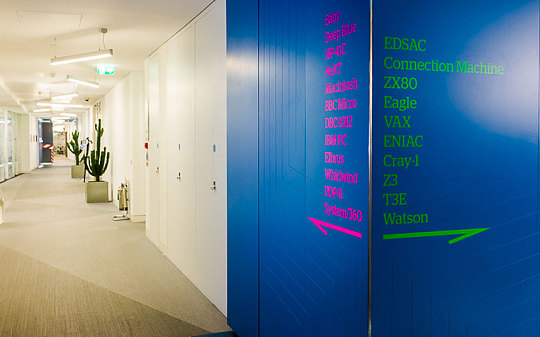
In the early days of Google, when Eric Schmidt was CEO, he frequently came to the London office where our meeting rooms were named after revolutionary computers. Eric invited everyone to an all hands meeting, and just answered our questions for an hour on any topic. He talked about Google’s strategy, the future of computing (back then, Android and Cloud were the new kids on the block) and tech in general. His mantras were ‘focus on the user’ and ‘revenue solves all problems’: if you solve real problems for real people (back then, our end users, advertisers, third party website owners), the money will follow.

This TED interview reminded me of those sessions. Like Eric I lived through the 90s when the internet took off, and was at Google in the 2000s when mobile took off. Gen AI will have a bigger impact on consumers than both of those combined, and I agree with Eric that we haven’t even see a fraction of its impact on each and every one of us. The difference between LLMs and ML is that they touch consumers whereas ML was largely B2B. When consumers drive change, things happen much faster.

Search gave us information at our fingertips, accessible anywhere on our phones. I love the analogy in his talk that LLMs will give everyone DaVinci powers. What if ChatGPT, Gemini and Claude turn us all into creative multi-dimensional thinkers? As an industry it’s our responsibility to make sure AI benefits people broadly, and that we implement it responsibly.

Do you agree or disagree? Comment on my LinkedIn post here.

#technology

#innovation

#ai

#genai

#LLMs

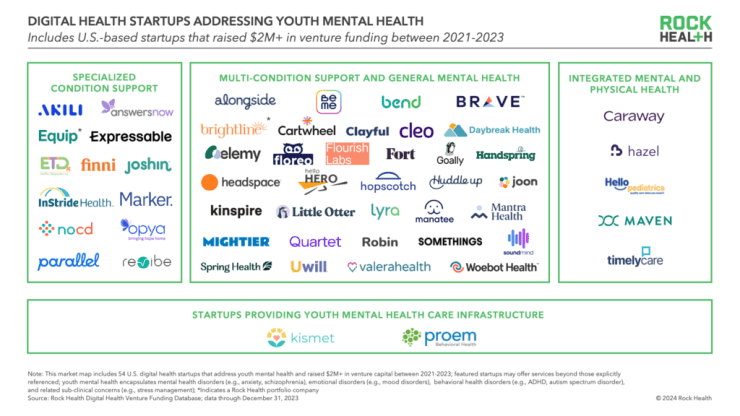
Rock Health’s Youth Mental Health Investment Report

The awesome team at Rock Health just launched a digital youth mental health initiative, in collaboration with Pivotal Ventures, Penner Family Foundation, Hopelab, and the Arthur M. Blank Family Foundation.
Their report on the digital youth mental health investment landscape is worth a read, and I was proud to see Peers.net by Flourish Labs featured in it 🙂
https://rockhealth.com/insights/investing-in-the-future-supporting-digital-innovations-in-youth-mental-health/

#mentalhealth

Introducing the Peers.net Giveback Initiative: making professional peer support accessible to all teens and young adults

Starting today, for every peer support session purchased on Peers.net, we are donating one to our community partners.

Fewer than a quarter of people who experience mental illness in America receive any outpatient mental health care. Of the young adults who got care, more than half pay for it out of pocket (SAMHSA National Survey). One of the biggest barriers to accessing care is cost, and many therapists don’t accept insurance.

We pay our professional peer supporters fairly for their work and provide free training, support and supervision for them. This means that our Peers.net service costs $65 for a 50 minute session. While that’s less than therapy, we know many people still need assistance to cover the cost.

We are committed to making Peers.net accessible to all youth.

To fulfil this commitment, we are partnering with nonprofits and youth-led organizations to donate free Peers.net sessions for their teen and young adult members until we have insurance coverage for our peer support.

The founding partners of our Peers.net Giveback Initiative are:

Active Minds is the nation’s premier nonprofit organization supporting mental health awareness and education for young adults. 

Dragonfly Mental Health is focused on cultivating excellent mental health in academics worldwide by developing, deploying, and evaluating evidence-based strategies. 

I Have The Right To works on creating an ecosystem of respect and support for students and survivors of sexual assault. Founded by a survivor and their parents, they are a hub for middle and high school students, parents, and educators looking for information, support, and avenues of action against sexual assault.

The Mental Health Initiative For South Asians (MHISA) is a grass-roots organization founded by students at UT Austin committed to addressing the societal and structural barriers which prevent South Asian-Americans from accessing mental health care.

Morgan’s Message strives to eliminate the stigma surrounding mental health within the student-athlete community and equalize the treatment of physical and mental health in athletics.

NAMI Clackamas is an Oregon-based chapter of the National Alliance on Mental Illness, dedicated to improving the quality of life for everyone impacted by mental health issues through support, education, and advocacy. We hope to work with more NAMI chapters in future.

OutCare Health is a non-profit leading the charge for LGBTQ+ health equity worldwide, empowering millions of LGBTQ+ individuals with comprehensive resources, support, and education.

Running Start is a nonpartisan nonprofit that trains young women to run for political office. When they surveyed their members how they could support them further, mental health was the #1 request.


We’ll be adding more partners over the next few months. If you are a non-profit or youth-led organization that would like to receive donated sessions for your members, please get in touch. It doesn’t matter whether your mission is directly related to mental health or not – all that matters is that you want to support the mental health of your teen and young adult members, and have a way to distribute our peer support sessions to them.

The role of philanthropy in funding mental health innovation

We believe that peer support should be part of the healthcare system, provided by professional peer supporters who are paid for their work, and funded equitably by insurance alongside other forms of mental health care.

Today, there are only 25,000 people who work as a peer support specialists in the US. Insurance reimbursement for peer support exists, but is not yet wide-spread. As a result, much of peer support is provided by volunteers and funded by philanthropy. This will not scale to reach the millions of people who could benefit from peer support.

We are actively working on partnerships with Medicaid and private insurance companies, so that our Peers.net service will be covered by insurance. But insurance contracts take a while to set up, especially for Medicaid which is administered differently in each state. 

Philanthropy can play an instrumental role to provide bridge funding to demonstrate that peer support works: for young people who want faster access to quality care, for provider groups who are thinking about integrating peer support into their care model, and for health insurance plans who are looking to reduce the overall cost of health care.

On the research side, Professors Keanan Joyner at UC Berkeley and Greg Hajcak at Santa Clara University are conducting a study to assess whether Peers.net telehealth peer support can reduce anxiety and depression in young adults. The study is independent of Flourish Labs, and funded by The Cohen Foundation, the Penner Family Foundation, and an individual donor.

Donors can also help us provide more peer support sessions to our partner organizations. Your donation will go directly to the organization to support their mental health work, and we will provide them with discounted sessions in addition to the free ones we’re donating. 

This is why I am announcing this initiative at the Milken Health Institute Future of Health Summit today, the most important gathering of philanthropists in the health space.

How you can help: Give the gift of peer support today

We’re going to keep giving away sessions until we have reached our goal of getting wide-spread insurance coverage for our peer support. We’re an early stage startup and have limited funds, so we need your help!

If you have a teen or young adult in your life who could benefit from support, consider buying a gift card for them. Remember, we’ll donate one session for every session you buy.

If you are a donor and would like to fund a bundle of 100 or more sessions to one of our partners or another organization you already support, and would like us to include in our Giveback Initiative, please get in touch.

Together with our community partners and your help, we can bring professional mental health peer support to millions of youth across the country who otherwise would not be able to access it.

#givebackmentalhealth#mentalhealth#Peersupport

This post was orginally posted on the Flourish Labs blog.